
Sustainable Fashion Alternatives for Everyday Wear
Last Updated: October 23, 2026
Quick Summary
Sustainable fashion alternatives for everyday wear prioritize durable natural materials, ethical production, and timeless designs over fast fashion trends. By choosing quality pieces made from fabrics like linen-cotton blends and organic cotton, you build a wardrobe where items are worn repeatedly, reducing waste and lowering your cost per wear over time.
- Linen-cotton blend garments become softer and more comfortable with each wash, lasting years longer than synthetic alternatives.
- Calculate cost per wear by dividing purchase price by estimated wears; a $300 piece worn 250 times costs $1.20 per wear.
- Secondhand shopping through thrift stores, clothing swaps, and resale platforms extends garment life while reducing environmental impact.
- Natural fiber pieces require gentler care but last decades when treated properly, eliminating hidden maintenance costs.
- Build versatile wardrobes with neutral basics and multipurpose separates that combine easily, maximizing outfit options from fewer pieces.
Table of Contents
- What Sustainable Fashion Alternatives Mean for Your Everyday Wardrobe
- Sustainable Fabrics for Clothing: Materials That Last
- Secondhand Clothing Alternatives: Quality Without the Price
- Affordable Sustainable Clothing Brands Worth Your Investment
- How to Shop for Sustainable Fashion: A Practical Framework
- Cost Per Wear: Why Sustainable Pieces Save Money Long-Term
- Building a Versatile Sustainable Wardrobe for Everyday Wear
- Frequently Asked Questions
What Sustainable Fashion Alternatives Mean for Your Everyday Wardrobe
Sustainable fashion alternatives for everyday wear aren't about sacrificing style or comfort, they're about choosing pieces that align with both your values and your lifestyle. At Alana Kay Art, we believe that the clothes you wear daily should inspire confidence while reflecting a commitment to thoughtful consumption.
The shift toward sustainable fashion alternatives represents a fundamental change in how we think about clothing. Instead of chasing trends that fade within a season, sustainable fashion emphasizes quality, versatility, and longevity. It's the difference between owning thirty pieces you wear once and owning fifteen pieces you actually love wearing repeatedly.
What makes sustainable fashion alternatives practical for everyday wear is their focus on real-world durability. A linen-cotton blend blouse that breathes beautifully and maintains its shape through dozens of washes outperforms a cheaper synthetic alternative that pills after three months. The initial investment feels higher, but the cost per wear, the actual expense divided by how many times you wear something, tells a completely different story.
Sustainable Fabrics for Clothing: Materials That Last
Natural and lower-impact materials form the foundation of sustainable fashion alternatives for everyday wear. The fabrics you choose determine how long a piece lasts, how comfortable it feels, and how it impacts the environment.
Linen stands out as one of the most durable and breathable options available. The Button Up Blouse - Linen exemplifies this approach, crafted from a luxurious linen-cotton blend that maintains its shape throughout the day while feeling amazing against your skin.

Organic cotton represents another strong alternative to conventional cotton, which relies heavily on pesticides and water-intensive farming practices. When you choose organic cotton, you're supporting agricultural methods that protect soil health and reduce chemical pollution.
Silk and silk blends offer luxury and longevity when cared for properly. A silk-cotton blend, like the Wild Rag Scarf Square - Silk Cotton, balances the luxurious drape of silk with the durability and washability of cotton.
The key to sustainable fabrics is understanding their care requirements. Natural fibers often need gentler handling, dry cleaning or hand washing, but this slower care routine actually extends their lifespan significantly. Pieces treated with care last decades rather than seasons.
Secondhand Clothing Alternatives: Quality Without the Price
Thrifting and secondhand shopping represent some of the most accessible sustainable fashion alternatives for everyday wear.
Clothing swaps with friends and family offer a free way to refresh your wardrobe while building community. You get pieces tailored to your style preferences from people who know you, and the environmental impact is zero.
Resale platforms have transformed how people access secondhand clothing. These marketplaces make it easy to buy and sell quality pieces, and they've created a circular fashion ecosystem where items get multiple lives.
Vintage clothing shops and online vintage retailers offer curated selections of pre-loved pieces that often carry more character and craftsmanship than mass-produced alternatives.
The psychological shift with secondhand shopping is important: you're no longer buying disposable fashion. You're selecting pieces with intention, knowing they've already been vetted by previous owners. This mindset naturally leads to more thoughtful consumption overall.
Affordable Sustainable Clothing Brands Worth Your Investment
Sustainable fashion alternatives for everyday wear don't require unlimited budgets. Several brands prove that quality, ethical production, and accessible pricing can coexist. Explore where to buy unique colorful clothing from various retailers to discover additional sustainable options beyond traditional department stores.
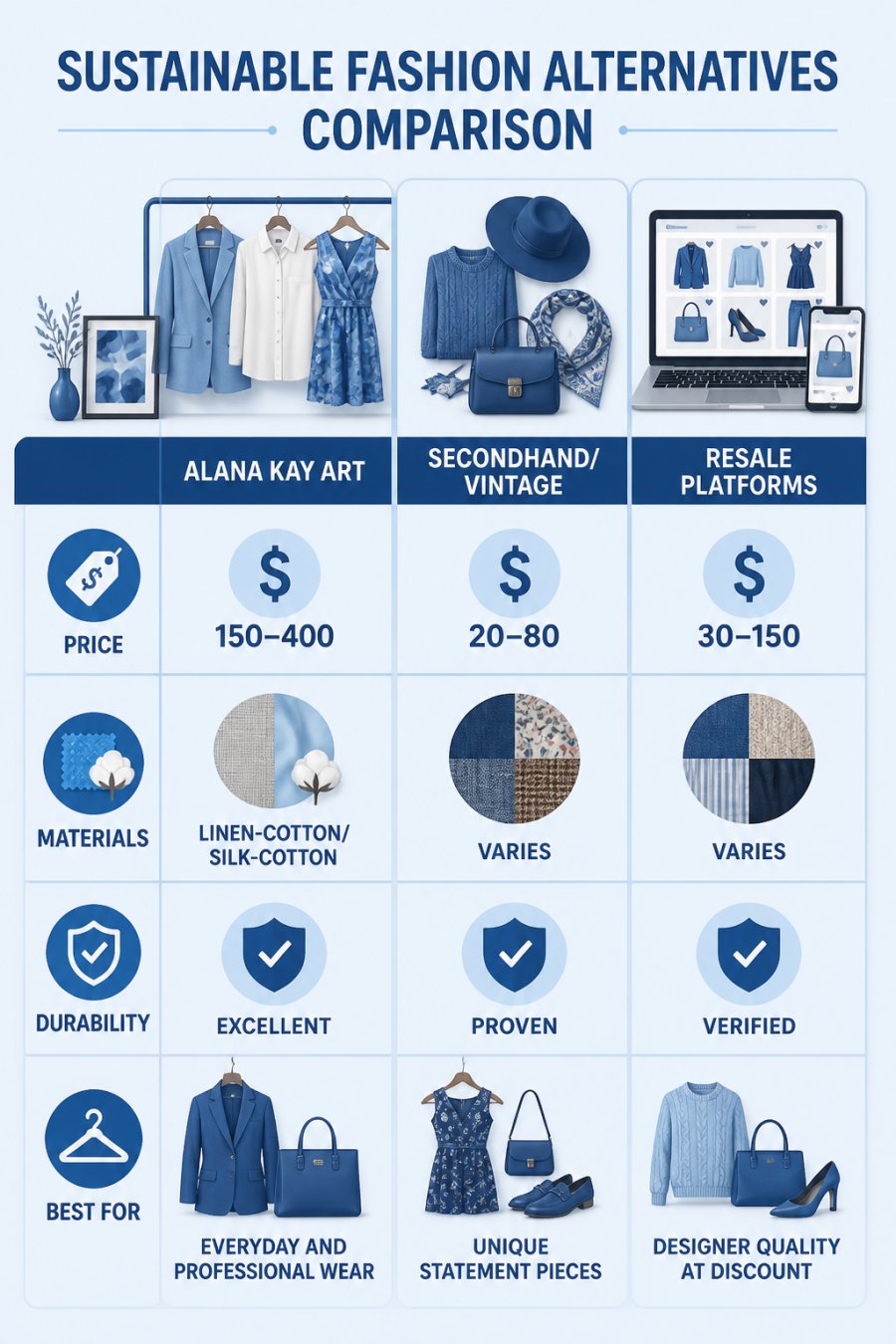
Alana Kay Art represents a different approach to affordable luxury, limited-edition pieces crafted from original artwork and thoughtful design. The Sleeveless Ruffle Blouse - Linen at $298 and the Elastic Waist A Line Skirt - Linen at $404 exemplify this philosophy.
When evaluating sustainable brands, look beyond the price tag. Consider the materials used, the production transparency, and the design longevity.
The versatility factor matters enormously for affordability. Pieces that work in multiple outfit combinations extend their value.
Building an affordable sustainable wardrobe means being selective. Rather than buying many pieces, invest in fewer items that work together and suit your actual lifestyle. Five versatile pieces you wear constantly beat twenty trendy items gathering dust.
How to Shop for Sustainable Fashion: A Practical Framework
Shopping for sustainable fashion alternatives for everyday wear requires a different mindset than typical retail browsing.
Start by auditing what you already own. Identify gaps in your wardrobe, the items you reach for repeatedly and the occasions where you feel like you have nothing to wear.
Research brand values before purchasing. Transparency matters: brands that openly discuss their materials, production locations, and labor practices deserve your business. Those that hide these details or use vague language like "ethically sourced" without specifics should raise questions.
Check fabric content carefully. Natural fibers like linen, cotton, and silk offer durability and breathability. Blends often provide the best balance of performance and care requirements. Avoid fabrics that require constant dry cleaning unless you're willing to invest in that maintenance.
Consider care requirements realistically. A beautiful silk piece that requires dry cleaning becomes expensive to maintain. A linen garment that improves with regular washing fits more seamlessly into everyday life. Match the care demands to your actual habits and lifestyle.
Cost Per Wear: Why Sustainable Pieces Save Money Long-Term
Understanding cost per wear transforms how you evaluate clothing purchases. This metric reveals the true financial value of sustainable fashion alternatives for everyday wear by accounting for longevity and frequency of use.
A piece worn one hundred times costs half as much per wear as a piece worn fifty times, regardless of the original price.
Calculate realistically. If you're considering a professional piece, estimate how many workdays you'll wear it per year. A blouse worn twice weekly for three years equals over 300 wears.
The durability advantage of natural fibers compounds this benefit. Linen and quality cotton actually improve with washing, they become softer and more comfortable. Synthetic alternatives often pill, fade, or lose elasticity within a year.
Maintenance costs factor into the true cost of ownership. Pieces requiring frequent dry cleaning add ongoing expenses that cheaper garments might not incur. A machine-washable linen piece eliminates these hidden costs entirely.
Building your calculation:
- Purchase price: $300
- Estimated wears over lifetime: 250 times
- Cost per wear: $1.20
- Expected lifespan: 5-7 years
- Maintenance cost: minimal (home washing)
Compare this to fast fashion alternatives and the financial case for sustainable pieces becomes obvious.
Building a Versatile Sustainable Wardrobe for Everyday Wear
Creating a sustainable wardrobe that actually works requires intentional selection of pieces that combine well. Versatility multiplies the value of each item and ensures you'll wear everything regularly.
Start with a neutral foundation. Quality basics in natural colors, cream, black, navy, grey, rust, form the base where everything else builds. These pieces work across seasons and pair with almost anything.
Add separates that mix and match easily. The Sleeveless Ruffle Blouse - Linen pairs with the Elastic Waist A Line Skirt - Linen for a coordinated look, but each piece also works independently with other items in your wardrobe.
Include statement pieces strategically. The Wild Rag Scarf Square - Silk Cotton at $82 adds personality to neutral outfits without requiring a large investment.
Layer thoughtfully. Pieces designed for layering extend seasonality and outfit options. A lightweight linen blouse works alone in summer and layers under sweaters in cooler months. This single piece serves your wardrobe year-round.
Prioritize fit and comfort above all else. Sustainable fashion alternatives for everyday wear only work if you actually wear them. Pieces that fit your body beautifully and feel comfortable will get worn repeatedly.
| Piece Type | Best For | Versatility Factor | Durability |
|---|---|---|---|
| Neutral linen blouse | Foundation layering | Works with 80% of other pieces | Improves with wear |
| A-line skirt | Everyday and professional | Pairs with multiple tops | 5+ years |
| Wide-leg pants | Casual and dressy | Works across seasons | Excellent |
| Silk-cotton scarf | Statement accessory | Transforms basic outfits | Heirloom quality |
Sustainable fashion alternatives for everyday wear represent a shift from quantity to quality, from trends to timelessness.
Frequently Asked Questions
What are sustainable fashion alternatives to fast fashion for everyday clothing?
Sustainable fashion alternatives include buying from ethical brands that use natural and lower-impact materials, shopping secondhand and vintage pieces, investing in durable basics designed to last years rather than seasons, and choosing versatile items you can mix and match. Pieces made from organic cotton, linen, or recycled materials reduce environmental impact. Brands like Alana Kay Art focus on quality, limited-edition designs that encourage wearing items longer and building intentional wardrobes rather than accumulating disposable clothing.
How do I know if sustainable clothing brands are actually ethical?
Look for transparency about production location, labor practices, and material sourcing. Reputable sustainable brands publish information about where garments are made and the conditions workers face. Check for third-party certifications like Fair Trade or B Corp status. Ask whether the brand uses natural fibers or recycled materials and how garments are dyed and finished. Independent designers and limited-edition makers often provide more traceability than mass-produced options. Don't hesitate to contact brands directly with questions about their supply chain and ethical practices.
What fabrics are best for sustainable everyday wear?
Organic cotton, linen, and linen-cotton blends are excellent choices for everyday wear because they're breathable, durable, and biodegradable. Linen is particularly strong and becomes softer with washing. Recycled polyester and regenerated fabrics like Tencel reduce waste from existing materials. Natural fibers require less chemical processing than conventional textiles and have lower environmental impact over their lifetime. Silk and silk blends add luxury while remaining natural. Avoid synthetic blends unless they use recycled content. Quality natural fiber garments typically outlast cheaper synthetic alternatives, making them better value over time.
Is secondhand clothing more sustainable than buying new sustainable brands?
Secondhand shopping is often the most sustainable option because it extends a garment's life and prevents textile waste. Buying pre-loved fashion requires no new production resources. However, secondhand options may be limited in size, style, or condition. New sustainable clothing from ethical brands is the better choice when you need specific items you can't find secondhand. The ideal approach combines both: shop secondhand first for basics and statement pieces, then invest in new sustainable pieces from ethical brands when secondhand doesn't meet your needs. This balances environmental impact with practicality.
How do I calculate cost per wear to justify investing in sustainable fashion?
Cost per wear divides the price by how many times you'll realistically wear an item. A $300 linen blouse worn twice weekly for three years equals roughly $0.58 per wear. Compare that to a $40 fast-fashion top worn five times before falling apart: $8 per wear. Sustainable pieces designed for everyday wear and built to last reduce cost per wear significantly over time. Consider durability, versatility, and timeless design when calculating. Items that pair with multiple outfits, work across seasons, and maintain quality through washing are better investments. Pieces from independent designers and limited collections often become personal favorites worn for years, dramatically lowering their true cost.

Leave a comment