
A Slow Fashion Guide for Women Over 40 to Dress With Intention
Last Updated: November 14, 2026
Quick Summary
Slow fashion is the practice of buying fewer clothes, choosing better materials, and keeping each piece for years, replacing trend cycles with intention. For women over 40, it means building a small capsule of versatile staples, setting a yearly budget, and using cost-per-wear math to choose well-made pieces that last.
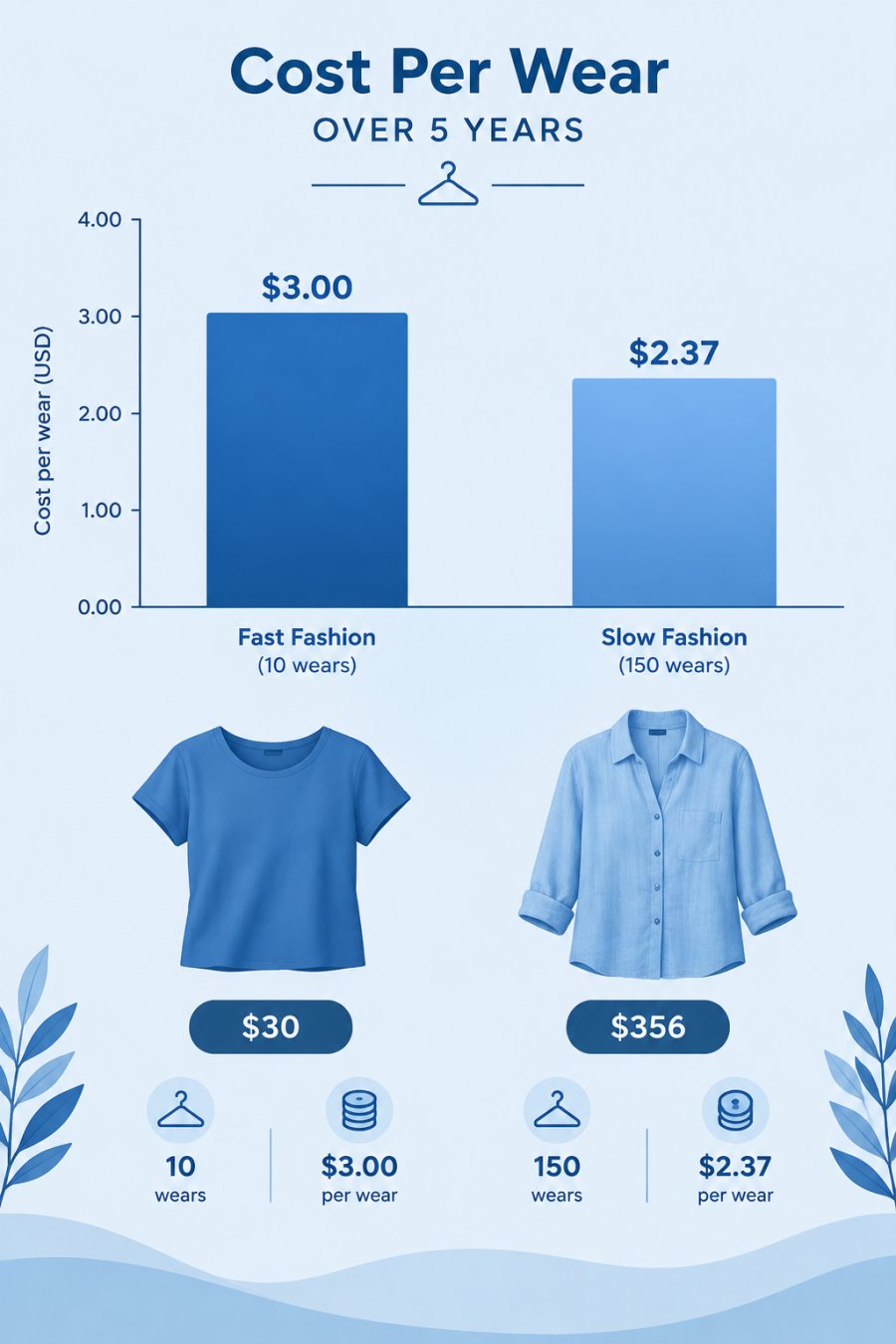
- Cost-per-wear divides a garment's price by how many times you wear it, so a $356 linen blouse worn 150 times costs about $2.37 per wear.
- A working capsule usually lands between 25 and 35 pieces including shoes and outerwear, split roughly into thirds.
- Pick two neutrals and two accent colors and commit to them for a full year before shopping.
- Reserve about 70 percent of your yearly clothing budget for planned investment pieces and 30 percent for replacements and repairs.
- Turn garments inside out before washing and repair at the first sign of wear to extend longevity.
Table of Contents
- Why Slow Fashion Fits Women Over 40 Better Than Fast Fashion
- Slow Fashion vs Fast Fashion Quality: What the Price Tag Hides
- How to Identify Quality Clothing Before You Spend
- How to Build a Sustainable Capsule Wardrobe Step by Step
- How to Plan a Year of Slow Fashion Without Blowing Your Budget
- Dressing for Comfort and Confidence in Your 40s and Beyond
- Start Your Slow Fashion Wardrobe With a Limited-Edition Piece
- Frequently Asked Questions
Why Slow Fashion Fits Women Over 40 Better Than Fast Fashion
A slow fashion guide for women over 40 starts with a simple truth: your body, your calendar, and your values have changed since your twenties. Fast fashion was built for a 22-year-old who replaces her closet every season.
Slow fashion is the practice of buying fewer clothes, choosing better materials, and keeping each piece for years. It replaces trend cycles with intention.
How Body Shape Changes in Midlife Change What You Buy
Bodies shift in midlife. Shoulders, waistlines, and hips redistribute, and fabrics that once skimmed now cling. A common mistake is buying the same size and cut you wore at 30, then blaming yourself when it feels wrong.
The fix is structure and drape. Look for an elastic waistband, a relaxed A-line, or a wide leg that moves with you.
The Psychological Shift From Trend-Chasing to Conscious Consumption
There is a moment when a trend stops feeling exciting and starts feeling exhausting. Many women over 40 describe it as finally trusting their own taste. Conscious consumption means you buy a piece because it fits your life, not because a feed told you to.
That shift is the real engine of midlife fashion. You stop dressing for approval and start dressing for yourself.
Slow Fashion vs Fast Fashion Quality: What the Price Tag Hides
The slow fashion vs fast fashion quality question comes down to construction. Fast fashion hides thin seams and loose threads behind a low price.
Cost-Per-Wear Math That Changes the Decision
Cost-per-wear is the price of a garment divided by how many times you wear it. A $30 top worn ten times costs $3.00 per wear. A $356 linen blouse worn 150 times costs about $2.37 per wear.
That math reframes everything. The "expensive" piece is often the cheaper one over time. This is how cost-per-wear turns a scary price tag into a clear decision.
How to Identify Quality Clothing Before You Spend
Learning how to identify quality clothing takes five minutes in the fitting room. Turn the garment inside out first. Check the seams, the fabric weight, and the fiber label before you look at the price.
Here is a quick checklist to use:
- Seams are tight and finished, with no loose threads
- Fabric feels substantial, not thin or scratchy
- Fiber label lists natural materials first
Natural Fibers That Work for Mature Skin
Natural fibers breathe, which many people find more comfortable as skin changes with age. Linen is a breathable choice for warm weather.
According to the Textile Exchange materials guidance, fiber choice is one of the biggest factors in how a garment wears over time. Choose natural fibers and you choose comfort and garment longevity at once.
How to Build a Sustainable Capsule Wardrobe Step by Step
A sustainable capsule wardrobe is a small set of pieces that mix and match across seasons. Most capsules run on a few dozen items. The goal is versatility, not volume. What separates a capsule that actually works from a closet purge that quietly refills itself is sequencing: you audit first, define a palette second, and only then buy.
For deeper sourcing help, our guide on where to buy unique colorful clothing covers spots that fit a slow wardrobe.
Step 1: Audit What You Already Own
Empty your closet and sort every piece into three piles: keep, repair, and let go. Be honest about what you actually wore last year. A wardrobe audit usually reveals that a small fraction of clothes does most of the work.
Go one layer deeper than the pile method. Count how many times you reached for each keep item in the past twelve months.
Watch out: don't let the let-go pile sit in bags in the garage for a year. Decide its destination the same week, whether that is donation, consignment, or a textile recycler, or it becomes clutter you re-sort next spring.
Step 2: Choose Versatile Staples for a 40+ Lifestyle
Build around pieces that work for several occasions. A few staples carry the whole capsule:
- A linen button-up blouse that layers or stands alone
- An elastic-waist A-line linen skirt with pockets
- Wide-leg pants that move from day to evening
These pieces share a palette, so everything pairs together. That is the minimalist aesthetic in practice.
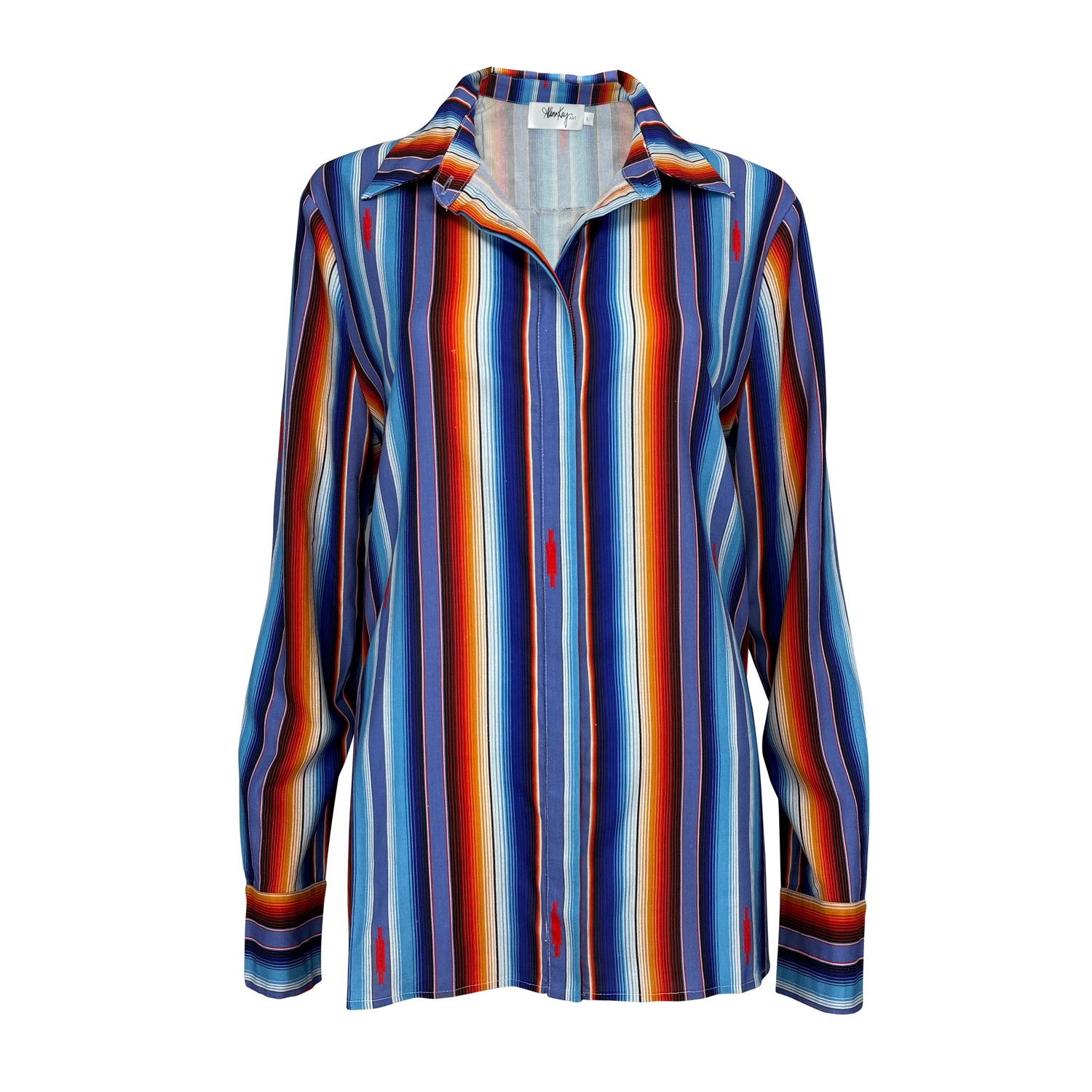
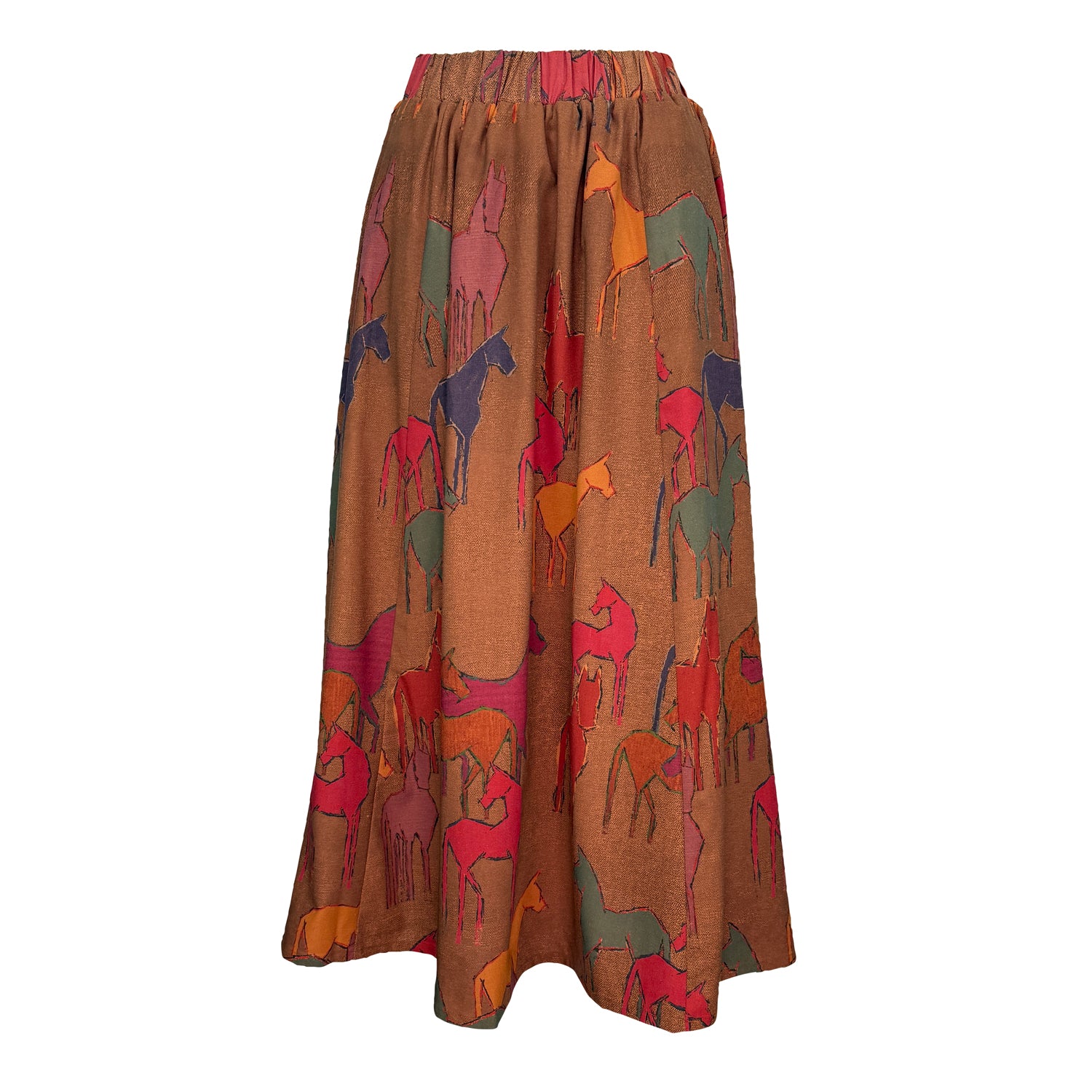
A working capsule usually lands between 25 and 35 pieces including shoes and outerwear, split roughly into thirds: tops, bottoms, and layers. The exact number matters less than the ratio. If your tops outnumber your bottoms three to one, you will still feel like you have nothing to wear, because outfit variety comes from combining categories, not from stacking one.
Step 3: Set a Palette Before You Shop
Pick two neutrals and two accent colors and commit to them for a full year. A common pattern is one warm neutral, one cool neutral, and two accents that flatter your skin tone as it has shifted in midlife. Every new piece must pair with at least three items you already own. If it doesn't, it is a one-outfit purchase, not a capsule piece.
Step 4: Rotate Seasonally Instead of Buying Seasonally
Store off-season pieces in bins and bring them out twice a year. Rotation does two things fast fashion cannot: it refreshes your wardrobe without spending, and it shows you which pieces you never miss. Anything that stays in the bin for two full seasons is a candidate to let go.
Step 5: Fill Gaps One Piece at a Time
Keep a running list of the specific gaps your audit revealed, such as a warm layer that works over dresses or a bottom that dresses up. Buy from that list only. This single habit is the difference between a capsule that holds for years and a closet that drifts back toward impulse buying.
Here is the five-step sequence the article recommends for building a capsule that actually holds.
| Step | What to do | Key detail |
|---|---|---|
| Step 1 | Audit what you already own | Sort into keep, repair, and let go piles |
| Step 2 | Choose versatile staples | Linen blouse, A-line skirt, wide-leg pants, jacket |
| Step 3 | Set a palette before you shop | Two neutrals and two accents for a full year |
| Step 4 | Rotate seasonally instead of buying seasonally | Store off-season pieces in bins, bring out twice a year |
| Step 5 | Fill gaps one piece at a time | Buy from your gap list only |
How to Plan a Year of Slow Fashion Without Blowing Your Budget
Budget-conscious slow fashion is possible with a plan, and it does not require a large clothing allowance. Most guides assume disposable income and skip the shopper who needs to rebuild a wardrobe carefully. This section claims that gap: a realistic annual plan plus the second-hand and repair routes that stretch every dollar.
Set a Yearly Number and Divide It Into Quarters
Set a yearly clothing budget and divide it into four quarterly amounts. Buy one or two investment pieces per quarter instead of a haul every month. This approach spreads the cost and gives you time to choose well. It also cuts impulse buys, which is where fast fashion wins.
A common pattern is to reserve about 70 percent of the yearly number for planned investment pieces and hold 30 percent for replacements and repairs. The reserve matters because slow fashion pieces get worn hard, and a re-sole or a lining repair is cheaper than a replacement.
Watch out: don't count a sale price as savings if the item was not already on your gap list. A discount on something you did not need is still spending.
Thrift and Second-Hand First for the 40+ Shopper
The second-hand market is the most underused budget tool for women over 40, and it fits slow fashion's logic better than buying new. Resale shops can be a practical place to find the natural fibers and classic cuts a midlife capsule wants.
A practical sequence:
- Search resale apps and local consignment shops for your gap list first, using the fiber and construction checks from the quality section above.
- Filter by material, not brand. A search for linen, merino, or silk returns better candidates than a search for a label.
- Inspect in person when you can. Check underarm seams, hems, and buttonholes, the three places wear shows first.
Second-hand also solves the sizing problem that trips up midlife shoppers.
Care and Repair Habits That Extend Garment Longevity
Clothing maintenance is half of slow fashion. Wash less often, in cold water, and air-dry when you can.
A common mistake is dry-cleaning everything. Check each label first. The silk-cotton Wild Rag scarf is dry clean only, so it needs careful handling.
Three habits carry most of the longevity gains:
- Turn garments inside out before washing to protect the face of the fabric.
- Use a mesh bag for knits and delicates so they don't stretch or snag in the drum.
- Repair at the first sign of wear. A small mend takes minutes; a neglected seam becomes a replacement.
A cobbler or tailor can extend the life of a favorite piece. Budget for repairs as a line item, not an emergency.
Dressing for Comfort and Confidence in Your 40s and Beyond
Comfort and confidence are not opposites. The best midlife fashion proves it. A relaxed fit and a smooth drape let you move through your day without tugging or adjusting.
The wide-leg pants with an elastic waist feature a smooth satin fabric that drapes gracefully and side pockets for practicality.
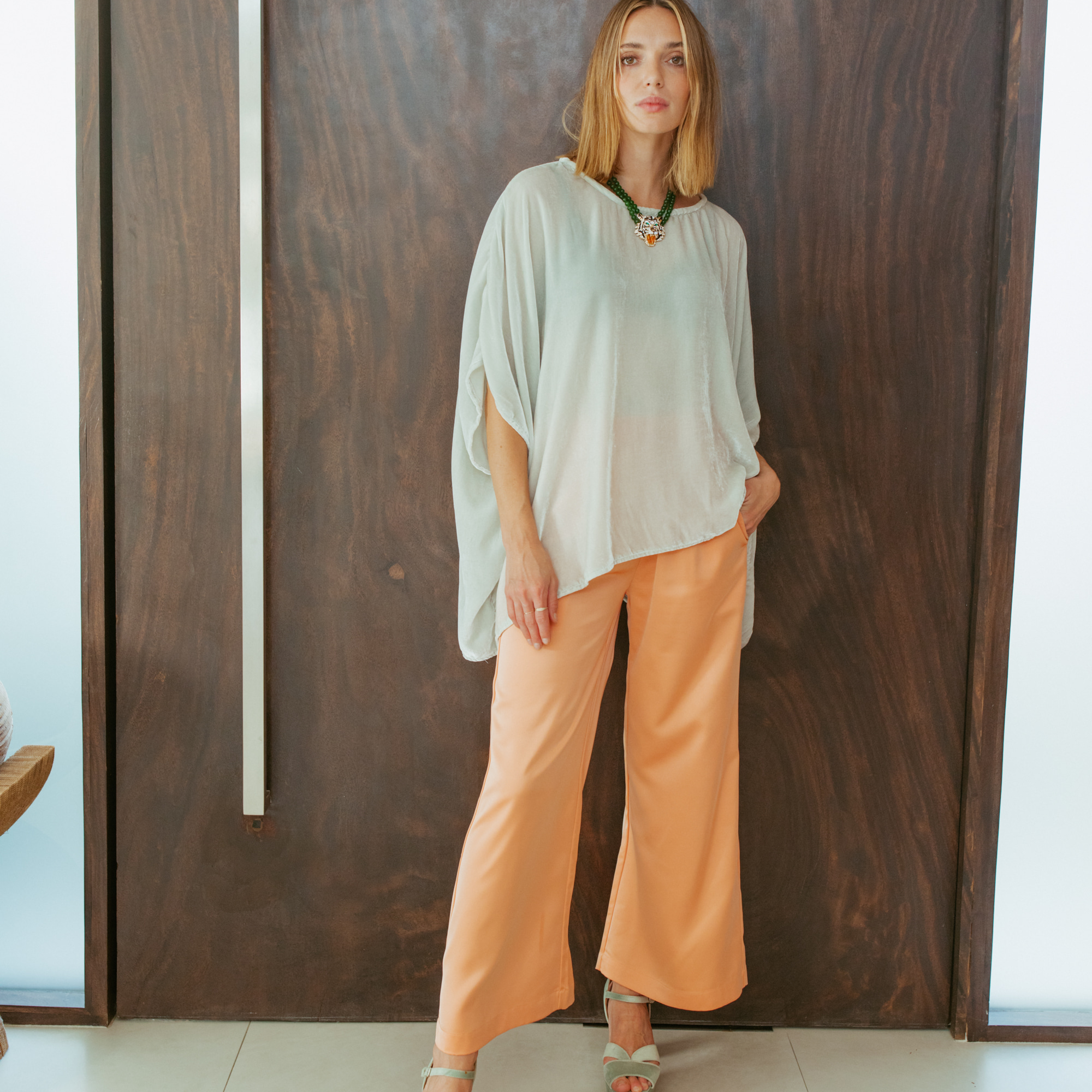
Fit and silhouette do the heavy lifting. When a garment fits your body as it is now, confidence follows on its own.
Start Your Slow Fashion Wardrobe With a Limited-Edition Piece
The best time to start is with one piece you love. A limited-edition item teaches you how slow fashion feels: special, well made, and worth keeping.
The silk-cotton Wild Rag scarf is handmade and comes beautifully boxed. It is a small, intentional first step into a slower wardrobe.
Building a slower wardrobe asks you to trust your own taste and buy less, better.
Frequently Asked Questions
What is slow fashion, and how is it different from fast fashion?
Slow fashion is a buying approach that prioritizes fewer, better-made pieces over frequent trend-driven purchases. Fast fashion relies on rapid production of inexpensive garments from synthetic materials, often with short useful lives. Slow fashion favors natural fibers, quality construction, timeless style, and transparent production. For women over 40, this shift often means buying pieces that fit a changing body well and hold up through years of wear, which reduces textile waste and supports more ethical clothing supply chains.
How can you tell if clothing is well made?
Check the seams first: they should be tight, straight, and finished so they do not fray. Look at the fabric content label for natural fibers like linen, organic cotton, or merino wool, which tend to last longer and breathe better. Test buttons, zippers, and closures for secure attachment. Hold the garment up to light to check for thin spots. A well-made piece also has matching patterns at the seams and a lining where structure matters. These checks help you identify quality clothing before you commit to the price.
How do you build a sustainable capsule wardrobe without starting over?
Start with a wardrobe audit: pull everything out, sort by how often you actually wear each piece, and set aside anything that no longer fits or suits your life. Keep the versatile staples that layer across seasons, like a linen button-up blouse or wide-leg pants with an elastic waist. Then fill gaps one piece at a time with items you can wear at least three ways. A sustainable capsule wardrobe grows through deliberate additions, not a single shopping spree, and it works best when each new piece earns its place.
Is slow fashion more expensive than fast fashion?
The upfront price is usually higher, but cost-per-wear tells a different story. A $356 linen blouse worn 150 times costs about $2.37 per wear, while a $30 top worn 10 times costs $3 per wear. Budget-conscious slow fashion works by planning purchases, buying second-hand where it fits, and choosing investment pieces that transition across seasons rather than chasing every trend.

Leave a comment