
Are Organic Cotton Clothes Worth It for Daily Wear?
Last Updated: October 31, 2026
Quick Summary
Organic cotton is grown without synthetic pesticides or fertilizers, and its benefits for daily clothing come down to how the fiber is grown and how the fabric breathes and handles moisture. Organic cotton shares cotton's comfort mechanics, so weave and fabric weight drive breathability more than the organic label. Use the label as an environmental and upstream-chemical signal rather than a comfort promise.
- Organic farming relies on crop rotation, compost, and biological pest control instead of synthetic pesticides and fertilizers.
- Breathability depends on weave openness and fabric weight, not on whether the cotton is organic.
- For sensitive skin, the dye process and added finishes often matter more than the fiber origin.
- Wash cold, inside out, on a gentle cycle, and line dry to make organic cotton clothes last.
- GOTS covers fiber through processing, while OCS verifies organic content without the same processing criteria.
Table of Contents
- Why Organic Cotton Deserves a Place in Your Daily Wardrobe
- Organic Cotton vs Conventional Cotton: What Actually Changes
- The Comfort Benefits: Breathability, Moisture, and Temperature
- Organic Cotton Clothing for Sensitive Skin
- The Best Cotton Fabric for Everyday Wear (and What to Ignore)
- How to Care for Organic Cotton Clothes So They Last
- Certification, Cost, and the Claims Worth Checking
- Choosing Organic Cotton Pieces for Your Everyday Rotation
- Frequently Asked Questions
Why Organic Cotton Deserves a Place in Your Daily Wardrobe
Organic cotton is cotton grown without synthetic pesticides or fertilizers, and it earns its place in a daily wardrobe because the fabric touches your skin for hours at a time. The benefits of organic cotton for daily clothing come down to a few key factors, including how the fiber is grown and how the fabric breathes and handles moisture. Below, we'll show you exactly where those benefits are real, where the claims get overstated, and how to spot a genuine organic garment from a marketing label.
Organic Cotton vs Conventional Cotton: What Actually Changes
The difference starts in the field. Conventional cotton is typically grown with synthetic pesticides and fertilizers, while organic farming relies on crop rotation, compost, and biological pest control instead. That shift changes soil health and water use.
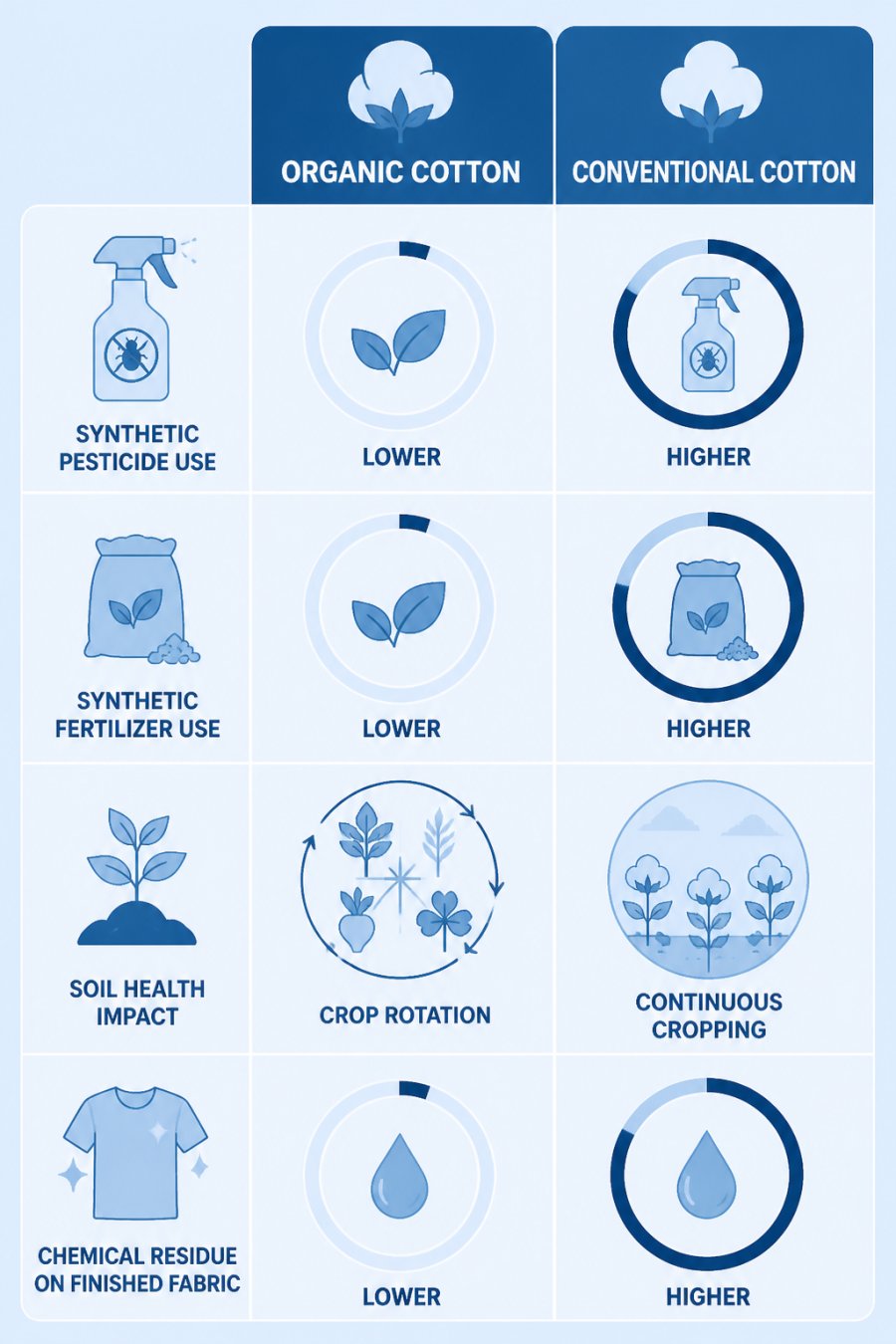
How the Two Cottons Are Grown
Conventional fields are managed for maximum yield per acre, often with repeated chemical applications through the season. Organic fields rotate crops and build soil fertility over years. The trade-off is real: organic yields can run lower, which is one reason the fabric costs more.
Chemical Exposure and What It Means for Wearers
Chemical residue questions are complex, and the stronger case for organic cotton is generally discussed as upstream: fewer harsh chemicals in the fields and the water.
The Comfort Benefits: Breathability, Moisture, and Temperature
Cotton's comfort reputation rests on fiber mechanics. A cotton weave lets air pass between yarns and moves moisture away from skin. Organic cotton shares those mechanics with conventional cotton because the farming method changes how the fiber is grown, not the fundamental structure of the cellulose. That distinction matters: if a brand claims organic cotton is inherently more breathable, ask for the weave and fabric weight, because those variables drive airflow far more than the organic label.
Here is how the comfort variables actually break down for daily clothing:
- Breathability depends on weave openness and fabric weight. A plain-weave cotton voile or a loose linen-cotton blend moves air more freely than a tight cotton poplin or a heavy cotton twill. For warm days, lighter weights and open weaves win.
- Moisture absorption is a fiber property. Cotton absorbs moisture well, but it also holds it, which is why a tight cotton tee can feel clammy during heavy exertion. Blends with linen or a looser knit improve drying speed.
- Temperature regulation is a system effect. Layering a breathable cotton or linen-cotton piece over a base layer gives you more control than any single fiber claim. Mid-weight cotton jersey works for layering; a heavy twill does not.
A common pattern in practice: the garment that feels most comfortable on a long day is usually the one with the right weave and fit for the climate, not the one with the loudest fiber badge. A linen-cotton blend, for instance, moves moisture and dries faster than a tight cotton poplin. Pieces built around linen-cotton blends, such as our sleeveless ruffle blouse in linen, are one option for a comfortable long day. Breathability, moisture absorption, and temperature regulation all improve when the fabric is loose, natural, and well finished.

The honest limit: comfort is personal, and no fiber guarantees it. The useful move is to match weave, weight, and blend to your climate and activity, then use the organic label as an environmental and upstream-chemical signal rather than a comfort promise.
Organic Cotton Clothing for Sensitive Skin
For sensitive skin, the finish and dye often matter more than the fiber origin. Hypoallergenic claims deserve scrutiny: no fabric is universally non-irritating, and a "chemical-free" label is marketing shorthand, not a scientific guarantee.
If your skin reacts easily, look at three things before the organic badge: the dye process, any added finishes, and how the garment feels against your neck and wrists. Softness you can feel matters more than a logo you can read.
The Best Cotton Fabric for Everyday Wear (and What to Ignore)
The best cotton fabric for everyday wear is a breathable natural fiber with a weave suited to your climate and a finish that survives washing. For warm days, a linen-cotton blend beats a heavy cotton twill. For layering, a mid-weight cotton jersey works well.
What to ignore: thread-count marketing on woven shirts, vague "eco" badges with no certification, and claims that organic cotton is inherently softer. It isn't.
How to Care for Organic Cotton Clothes So They Last
Wash cold, inside out, on a gentle cycle, and line dry when you can. Heat is what breaks down natural fibers fastest. Skip fabric softener, and treat stains promptly.
A common mistake is over-washing. Air garments between wears and wash less often. That habit protects durability and keeps the fabric's breathability intact longer than any detergent will.
Certification, Cost, and the Claims Worth Checking
A genuine organic claim should trace to a certification, and the verification step is where most shoppers stop too early. In the United States, the USDA National Organic Program sets the rules for the organic label, and textiles carrying a certified organic claim should be able to show a certificate. The Federal Trade Commission's Green Guides also require environmental marketing claims to be truthful and substantiated, which is a useful filter for vague "eco" language.
Two certification systems come up most often in clothing, and they certify different things:
- GOTS (Global Organic Textile Standard) covers the fiber through processing, including social and environmental criteria at each stage. A GOTS claim on a finished garment is a stronger signal than a fiber-only claim because it addresses processing, dyes, and wastewater handling.
- OCS (Organic Content Standard) verifies the organic content of a product but does not set the same processing and social criteria as GOTS. An OCS label tells you the fiber content claim is verified; it does not tell you the whole garment is low-impact.
A practical verification routine:
- Look for a certification logo and a license number on the hangtag or product page.
- Check the certifier's public database or the brand's certificate on request. Reputable brands can produce a transaction certificate for a specific product.
- Treat "organic" as a fiber claim, not a garment claim. Dyes, finishes, and blends can carry their own chemical and environmental attributes that the fiber label does not describe.
Cost is the honest sticking point. Organic fiber usually costs more at purchase, so the value case rests on cost per wear. A simple framework is to divide the purchase price by the number of times you expect to wear the piece. Durability and care habits move that math more than the initial price tag. Wash cold, line dry, and repair small issues early, and a well-made organic piece can spread its cost across years.
If you want more options beyond this guide, our roundup of where to buy unique colorful clothing covers other places worth checking.
Here is how the two certification systems compare, plus the verification steps worth taking.
| Item | What it covers | Note |
|---|---|---|
| GOTS | Fiber through processing, social and environmental criteria | Stronger signal than a fiber-only claim |
| OCS | Verifies organic content of a product | Does not set GOTS processing and social criteria |
| Certification logo | License number on hangtag or product page | First verification step |
| Certifier database | Public database or brand certificate on request | Brands can produce a transaction certificate |
| Organic label | A fiber claim, not a garment claim | Dyes and finishes carry their own attributes |
Choosing Organic Cotton Pieces for Your Everyday Rotation
Build a rotation around five or six pieces you actually reach for: a breathable blouse, an easy skirt, a layering top, and one statement piece. You can browse limited-edition designer apparel to find organic and linen-cotton pieces for your daily wardrobe. Our full apparel collection is a good place to start, and an elastic-waist A-line skirt in linen pairs well with a simple top.

Look for natural fibers, a finish that feels good on skin, and construction that holds up to regular washing. Buy fewer pieces, wear them more, and let the fabric earn its cost over time.
Frequently Asked Questions
Is organic cotton better for everyday clothing?
For most people, yes. Organic cotton is grown without synthetic pesticides and fertilizers, and it is soft, breathable, and comfortable for all-day wear. It absorbs moisture well and helps regulate temperature, which matters if you wear the same pieces to work and on weekends. That said, the finished garment matters too: dyes, finishes, and blends affect how a piece feels and wears. Check the label for organic certification and look at the full fabric content before you buy.
Is organic cotton softer than conventional cotton?
It often feels softer, but the difference comes more from how the fiber is processed than from the organic label alone. Organic cotton fibers are frequently handled with gentler processing, and long-staple varieties feel smoother against the skin. A well-made conventional cotton can also feel soft. The reliable way to judge softness is to feel the garment or read reviews about hand-feel, then check whether the fabric is a blend, since linen or other natural fibers change the texture.
How do you care for organic cotton clothes?
Wash in cold water on a gentle cycle with a mild detergent, and skip fabric softener, which coats the fibers. Turn pieces inside out to protect color, and air dry when you can, since high heat breaks down cotton fibers over time. If you tumble dry, use low heat and remove items while slightly damp. Store folded rather than on narrow hangers to keep shapes intact. These habits preserve softness and extend garment life, which matters more for value than the organic label alone.
Does organic cotton breathe better than polyester?
Cotton, organic or not, is a natural fiber that absorbs moisture and lets air move through the fabric. Polyester is synthetic and tends to trap heat and hold odor, though it can wick moisture in athletic knits. For everyday wear like blouses, skirts, and layering pieces, cotton and cotton-linen blends generally feel cooler and fresher across a long day. If you run hot or sit in meetings for hours, a breathable natural fiber is usually the more comfortable choice.
The real test of any garment is how it feels on a Tuesday morning when you have five minutes to get dressed. We build limited-edition apparel from original artwork and natural fiber blends, with bold color and thoughtful design in every piece. Explore the collection at Alana Kay Art and find a piece you will reach for again and again.

Leave a comment