
How to Transition to a Sustainable Wardrobe Without Waste
Last Updated: November 7, 2026
Quick Summary
To transition to a sustainable wardrobe, start with a closet audit instead of a shopping list: sort everything into keep, repair or tailor, and release piles, then track wear frequency to see what you actually wear. Build from there with repairs, swaps, and secondhand finds, judging purchases by cost per wear rather than sticker price.
- Tag borderline items and release anything still unworn after a season.
- Cost per wear is the price of a garment divided by the number of times you wear it.
- The 12-month plan starts with a closet audit in months 1-3.
- Wash less often, in cold water, and air-dry to extend garment life.
- Secondhand pieces are already made, so their environmental cost is behind them.
Table of Contents
- Start With a Wardrobe Audit, Not a Shopping List
- How to Build a Sustainable Wardrobe on a Budget
- A Sustainable Wardrobe Without Starting Over
- Sustainable Wardrobe Essentials That Do the Most Work
- How to Make Clothes Last Longer
- Shop Secondhand and Buy Fewer, Better Pieces
- Build Your First Intentional Purchase With Alana Kay Art
- Frequently Asked Questions
Start With a Wardrobe Audit, Not a Shopping List
The first step in how to transition to a sustainable wardrobe is not buying anything new. It is looking hard at what you already own. A sustainable wardrobe is a collection of clothes you actually wear, chosen with intention and kept in use for years.
Most closets hold far more than the owner wears. The audit finds the gap between the two.
The Three-Pile Closet Cleanout
Pull everything out. Yes, everything. Then sort each item into one of three piles:
- Keep: fits well, gets worn, feels good on
- Repair or tailor: good fabric, wrong fit or a small flaw
- Release: wrong size, uncomfortable, or unworn for a year
Be honest about the third pile. A common mistake is keeping clothes for a "someday" version of your life.
Track Wear Frequency Before You Decide
Before you release anything borderline, tag it. Turn the hanger backward or add a small safety pin. If the item is still untagged after a season, it is not part of your wardrobe in practice.
This simple tracking habit is the backbone of every intentional closet. It shows you what you truly reach for, and it stops impulse buying in its tracks.
How to Build a Sustainable Wardrobe on a Budget
A sustainable wardrobe does not require a big budget. It requires patience and a shift in how you judge cost. Slow fashion is a mindset, not a price tier. You can build a thoughtful closet from secondhand finds, clothing swaps, and a few planned purchases.
Cost Per Wear Beats Sticker Price
Cost per wear is the price of a garment divided by the number of times you wear it. A $300 piece worn 100 times costs $3 per wear. A $40 top worn twice costs $20 per wear. Run that math before you buy. It reframes the whole decision:
- A versatile basic earns its place fast
- A trend piece rarely does
- Repairs almost always beat replacements
Budget-friendly and sustainable are not opposites. They line up more often than fast fashion marketing suggests.
Track Four Numbers, Not Just Spending
Cost per wear is one metric. A measurable wardrobe audit uses a few more to show whether your transition is actually working:
- Wears per item: Count how many times you wear each piece in a season. Items worn fewer than three times are candidates for release or restyling.
- Cost per wear: Recalculate it after a season, not just at purchase. A $120 jacket worn 40 times is $3 per wear; a $60 jacket worn four times is $15 per wear.
- Repair rate: Note how many items you repaired versus replaced. A rising repair rate is a sign your closet is getting more durable, not less.
- New purchases avoided: Count the items you chose not to buy after a swap, resale find, or repair. This is the clearest measure of progress and costs nothing to track.
A simple spreadsheet or notebook works. The point is to review your progress with numbers each season.
Evaluate Sustainability Claims Before You Pay
Budget decisions and sustainability claims are linked: paying more for a vague "eco" label is not a saving. The Federal Trade Commission's Green Guides set the rules for environmental marketing claims in the United States, and they ask marketers to avoid broad, unqualified terms like "sustainable" or "eco-friendly" unless they can back them up.
Certifications are not all equal, and none is a guarantee. Common ones you may encounter include GOTS for organic textiles, OEKO-TEX for harmful-substance testing, and Fair Trade Certified for labor standards. Each covers a different part of the supply chain, so a garment can carry one and still have gaps elsewhere.
Budget Strategies for Different Lives
A sustainable wardrobe has to fit your actual budget, body, climate, and work.
- Tight budget: Prioritize repairs and swaps first, then secondhand.
- Plus or hard-to-fit sizes: Secondhand selection can be thinner, so plan around a few reliable resale platforms and local swaps rather than one-off hunting.
- Cold or wet climates: Invest in a small number of durable outerwear and footwear pieces; these take the most wear and are the hardest to replace cheaply.
- Physical accessibility needs: Choose closures, fabrics, and fits you can manage independently, and factor alterations into the purchase price.
Watch out: Price reflects brand positioning as much as materials, so check the label and construction before assuming a costly piece is the better buy.
A Sustainable Wardrobe Without Starting Over
You do not need to throw out your closet to begin. As you make those small seasonal changes, a sustainable capsule wardrobe can help you focus on versatile pieces you already own.
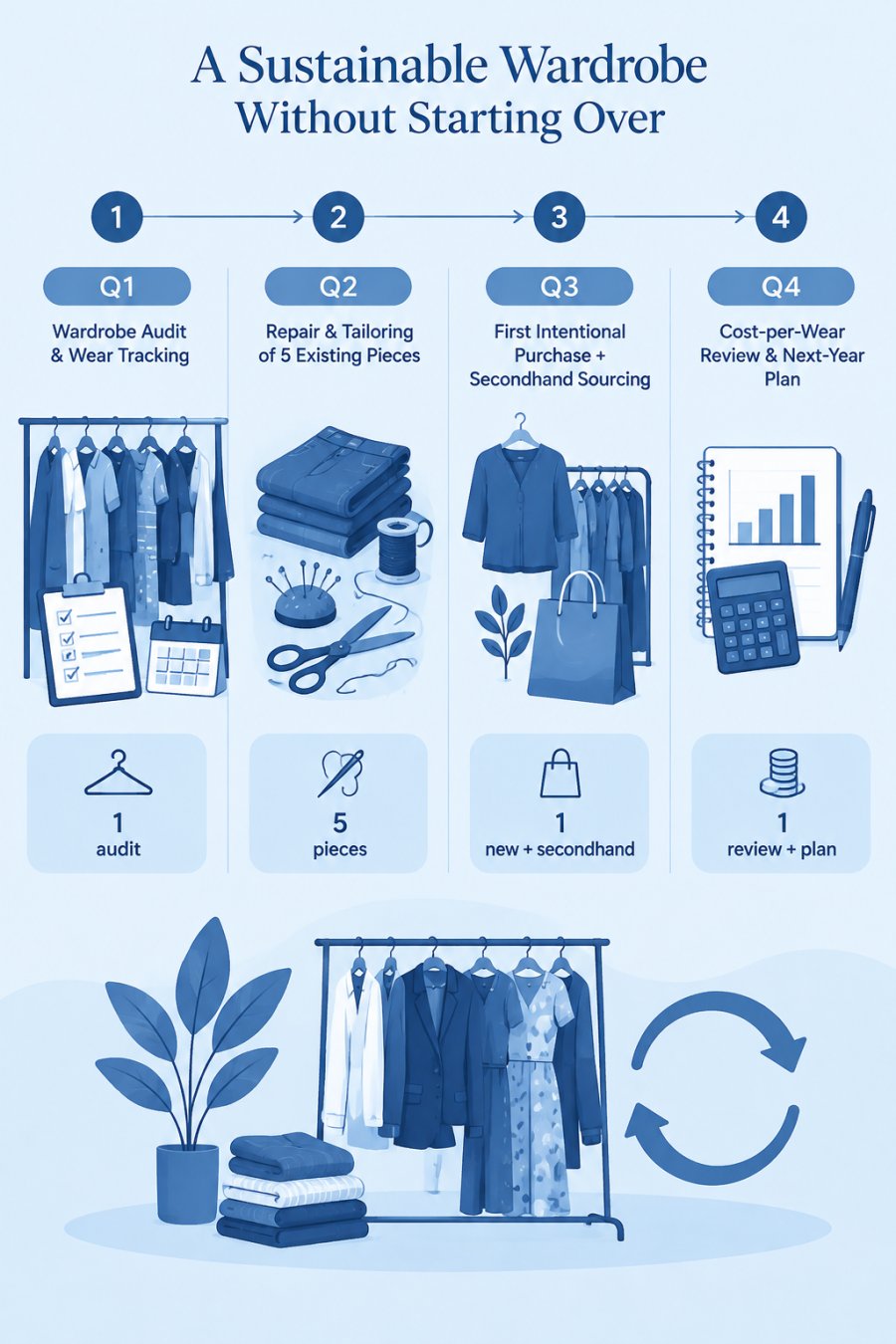
A 12-Month Transition Timeline
Here is the plan we would follow:
- Months 1-3: Audit your closet and track wear frequency.
- Months 4-6: Repair, tailor, and restyle what you already own.
- Months 7-9: Make your first intentional purchase and shop secondhand.
- Months 10-12: Review cost per wear and plan next year.
The transition happens in small steps across a year rather than all at once.
| Timeframe | What to do |
|---|---|
| Months 1-3 | Audit your closet and track wear frequency |
| Months 4-6 | Repair, tailor, and restyle what you already own |
| Months 7-9 | Make your first intentional purchase and shop secondhand |
| Months 10-12 | Review cost per wear and plan next year |
Sustainable Wardrobe Essentials That Do the Most Work
The best sustainable wardrobe essentials are versatile basics you can mix and match across seasons. A few durable pieces that layer well will outwork a closet full of single-outfit items.
Think natural fibers, timeless cuts, and colors that pair with everything. A well-cut linen blouse, an A-line skirt, and a silk-cotton scarf can carry a whole week of outfits. You can browse our dresses to see how one hardworking piece anchors a small wardrobe.
How to Judge Quality and Sustainability Claims
Check construction first: seams, buttons, and fabric weight. Then read the label. Natural fibers like linen and cotton breathe and last.
For sustainability claims, look for specific, verifiable language rather than vague green wording. The Federal Trade Commission's Green Guides set the rules for environmental marketing claims in the United States. If a brand cannot back a claim, treat it as marketing, not fact.
How to Make Clothes Last Longer
Garment longevity comes down to care. Wash less often, in cold water, and air-dry when you can. These habits protect fabric and reduce waste at the same time. Store pieces folded or on sturdy hangers. Keep wool and silk away from direct sun. A little care adds years to a favorite piece.
Material Trade-Offs Worth Knowing
No fiber is perfect. A balanced view helps you choose pieces you will actually keep:
- Cotton: Breathable and durable, but conventional cotton is water- and pesticide-intensive. Organic cotton reduces chemical inputs, though it still uses water.
- Linen: Made from flax, it is strong, breathable, and gets softer with age. It wrinkles easily, which is a care trade-off rather than a durability problem.
- Wool: Warm, odor-resistant, and long-lasting, so it can be washed less often. It needs careful storage against moths.
- Silk: Lightweight and strong for its weight, but sensitive to harsh detergents and direct sun.
The practical takeaway is not to avoid one fiber entirely but to match fiber to use and keep the garment in rotation longer. Longevity usually matters more than the fiber label alone.
Laundry Habits That Extend Life
Most wear happens in the wash, not on the body. A few mechanics make the difference:
- Wash less often; air garments between wears when they are not soiled.
- Use cold water, which is gentler on fibers and reduces energy use.
- Turn garments inside out and use mesh bags for delicates and synthetics to reduce abrasion and microfiber shedding.
- Air-dry when possible; dryer heat breaks down fibers and shrinks natural fabrics.
- Use a gentle detergent and skip fabric softener, which can coat and weaken fibers over time.
Watch out: Washing synthetic fabrics releases microfibers that can pass through wastewater systems. A mesh wash bag and a full load rather than a partial one reduce shedding, but they do not eliminate it.
Repair, Restyle, and End-of-Life Options
Mending and tailoring are the cheapest sustainability tools you have. A repaired seam or a taken-in waist keeps a good garment in rotation.
When a piece truly reaches the end, choose the best exit:
- Resale or trade-in for wearable items in good condition
- Donation for clean, good-condition clothes, with the understanding that donated items are sorted and a portion may be exported or downcycled rather than reworn
- Textile recycling for worn-out fabric, though curbside textile recycling is limited in many areas and drop-off programs vary
- Upcycling for fabric you can cut down into cleaning cloths, patches, or a new garment
A handmade silk-cotton scarf like our Wild Rag Scarf is an accessory worth caring for and keeping for years. The same logic applies across a wardrobe: the most sustainable garment is usually the one you already own and keep wearing.

Shop Secondhand and Buy Fewer, Better Pieces
Secondhand shopping adds new-to-you clothes without new production. Pre-loved pieces are already made, so the environmental cost is behind them.
Buy fewer, better pieces and fill gaps with resale, swaps, and vintage. For a deeper list of where to look, see our guide to where to buy unique colorful clothing. This is responsible consumption in practice: planned purchases, not impulse buys.
Build Your First Intentional Purchase With Alana Kay Art
Your first deliberate purchase should be a piece you will wear for years. At Alana Kay Art, we design limited-edition apparel from original artwork, with bold color and thoughtful design built to be collected and worn.
Start with a versatile separate, like our linen separates, and pair it with what you already own.
Transitioning takes patience, not perfection. If you are ready to add one intentional, artist-driven piece to your closet, Alana Kay Art can help.
Frequently Asked Questions
How can I make my wardrobe more sustainable without replacing everything?
You do not need to replace anything. Start by auditing what you own and tracking wear frequency for a month, then repair, tailor, or restyle the pieces you already have. A sustainable wardrobe grows through planned purchases made only when a real gap appears, not through a closet overhaul. Most people find their existing clothes cover more of their needs than expected once they organize and mend them.
How do I build a sustainable wardrobe on a budget?
Shop secondhand and pre-loved clothing first, prioritize cost per wear over sticker price, and buy versatile basics that mix and match across outfits. Set a monthly clothing budget and let it roll over for larger planned purchases instead of impulse buying. Repairing and tailoring what you own is usually the cheapest option of all, and clothing swaps with friends cost nothing.
What should I look for when buying sustainable clothing?
Check the fabric content and construction first: natural fibers, sturdy seams, and lining that holds up to wear. Look for specific, verifiable claims rather than vague green language, and see whether the brand explains where and how pieces are made. Wear frequency matters too. A piece you wear weekly for years beats a trend-driven item worn twice, whatever its label says.
How can I make my clothes last longer?
Wash less often, in cold water, and air-dry when you can. Store knits folded rather than hung, and address small repairs like loose buttons or hem tears before they grow. Tailoring an item to fit better often adds years of wear. When a piece truly reaches the end, resell, swap, or donate it, and check local textile recycling options for anything unwearable.

Leave a comment