How Do You Start a Wearable Art Collection?
Last Updated: November 22, 2026
Quick Summary
Starting a wearable art collection begins with one intentional purchase: a single piece you love enough to wear often, from an artist whose work you understand and can care for. A wearable art collection is a small, curated set of expressive pieces chosen for story, craft, and fit with your life, not a closet full of loud clothes.
- Check four things before buying: the artist's name, fiber content, construction, and care instructions.
- Start with one jewelry piece you can wear to work, to dinner, and with denim.
- Set a total annual budget, then divide it into one anchor piece and two to three smaller additions.
- Entry-tier pieces under $150 like scarves and small jewelry test the artist's palette and fit.
- Store wearable art flat or on padded hangers, away from direct sunlight.
Table of Contents
- How Do You Start a Wearable art collection?
- Wearable art examples to Anchor Your First Purchase
- Wearable art clothing: What to Look For Before You Buy
- Wearable art designers and How to Vet Them
- Wearable art jewelry: The Easiest Entry Point
- Building a Budget and a Collection Plan
- Caring For and Storing Your Pieces
- Shop Your First Artist-Made Piece
- Frequently Asked Questions
How Do You Start a Wearable art collection?
Starting a wearable art collection begins with one intentional purchase: a single piece you love enough to wear often, from an artist whose work you understand and can care for.
Below, we cover what counts as wearable art, how to vet the artist behind a piece, where to start with jewelry, and how to budget so your collection grows without regret.
The Costume Institute's approach to fashion as art
What Makes a Piece Wearable Art
A piece qualifies as wearable art when the artist's concept drives the design, not a trend calendar. The garment or accessory carries original surface design, sculptural shape, or handcrafted detail that you cannot find in mass production.
Three things separate artwear from ordinary statement clothing:
- Original concept. The print, painting, or form starts with the artist's own vision.
- Craft you can inspect. Seams, finishes, and materials hold up to close looking.
- Wearability. The piece moves with you and suits real occasions.
Wearable art examples to Anchor Your First Purchase
The fastest way to understand wearable art examples is to look at how artists translate a concept into cloth, metal, or trim.
The Penny Deluxe Wild Horses Faux Fur Trim Coat is an example: a painted horse motif on crushed velvet, finished with faux fur trim along the front, cuffs, and hem.
Other common forms include:
- Printed silk scarves
- Artist-collaboration blouses with exclusive prints
- Embellished jackets with hand-finished trim
Sculptural and Surface-Designed Pieces
Sculptural pieces change the silhouette. Surface-designed pieces change the canvas. Most beginners start with surface design because it is easier to wear daily.
Our Penny Deluxe Wild Horses Faux Fur Trim Coat shows the sculptural side: crushed velvet, painted horse motif, and plush trim along the front, cuffs, and hem. It is a coat that turns a sidewalk into a runway.
Wearable art clothing: What to Look For Before You Buy
Check four things before buying wearable art clothing: the artist's name on the design, the fiber content, the construction, and the care instructions. If any is missing, ask before you pay.
Start with the label. Our Button Up Blouse - Satin carries an exclusive wild horses print from a collaboration with artist Mika Devaney, which tells you exactly what you are buying into.
Then read the fiber content. The Wild Rag Scarf Square - Silk Cotton is 30% silk and 70% cotton, and the Wild Rag Scarf Square - Silk Charmeuse is 100% silk charmeuse.
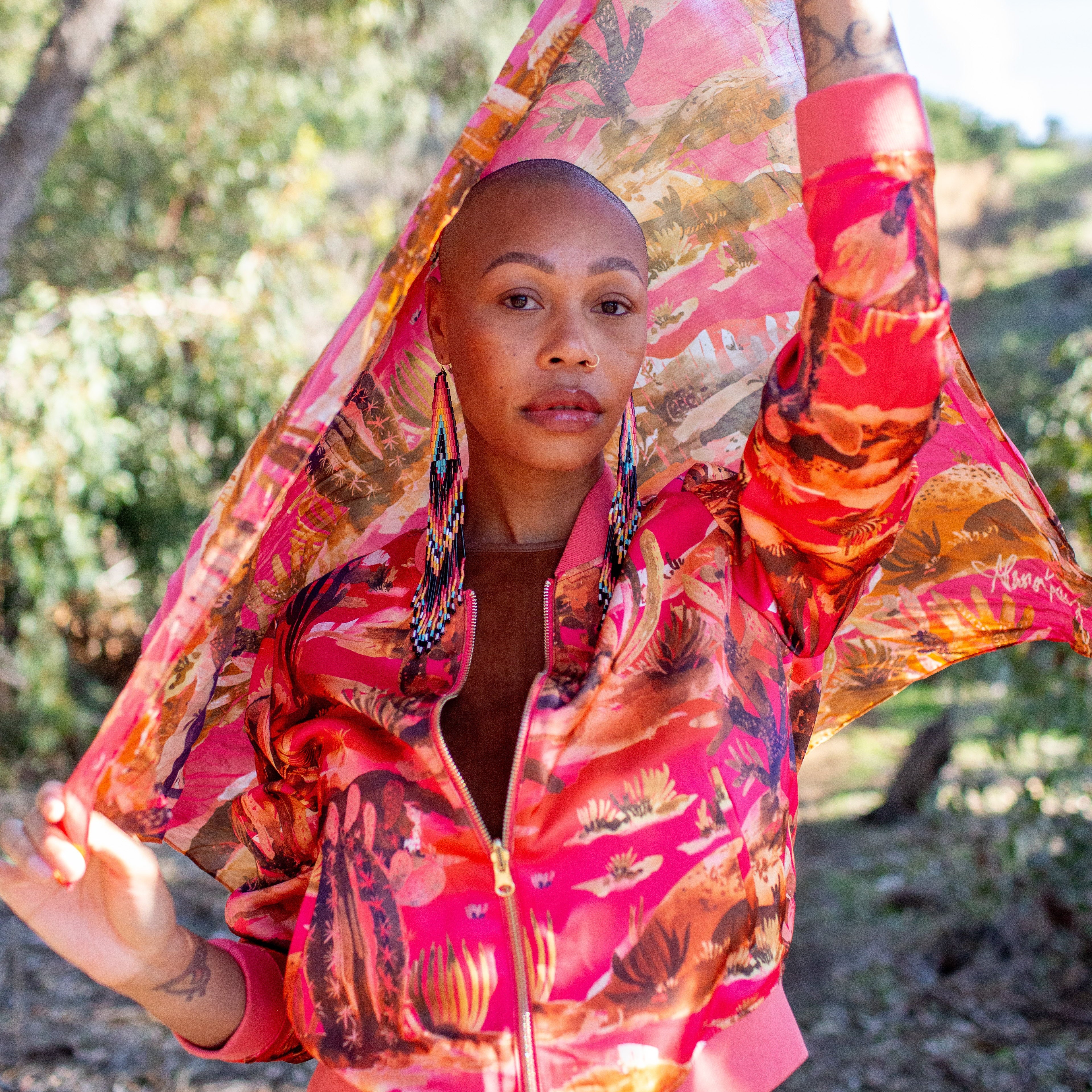
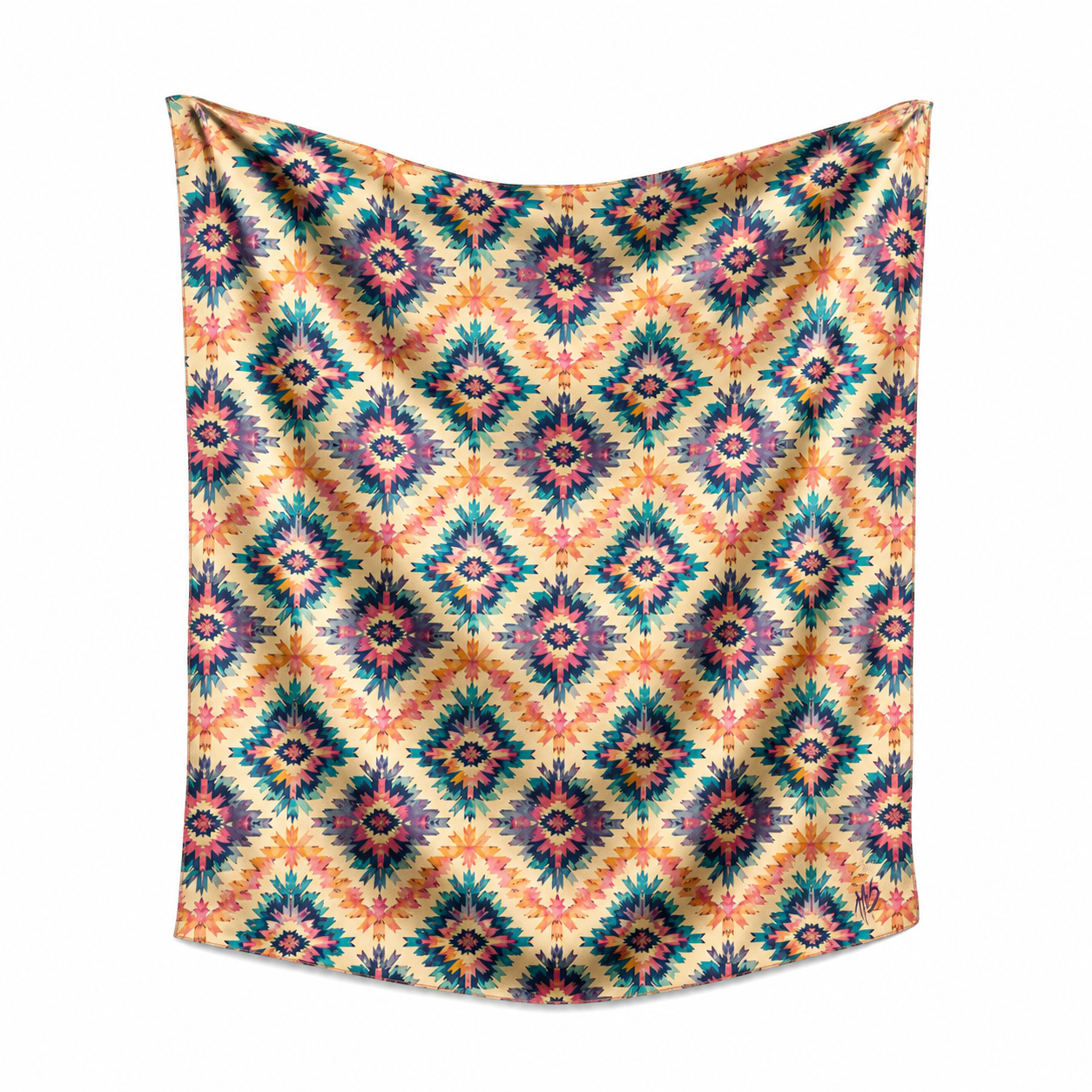
Finally, check the care tag. The Wild Rag Scarf listings specify dry clean only.
- Artist or collaboration named on the design
- Fiber content listed
- Care instructions stated
- Return policy clear
Wearable art designers and How to Vet Them
Vetting a wearable art designer is a paperwork exercise as much as an aesthetic one. Before you spend, confirm who made the work, how it was produced, the edition terms, and your recourse if the piece arrives wrong. A short email to the studio answers most of this faster than any product page, and a serious maker will answer in writing.
Start with authorship, not aesthetics
Ask whether the artist creates the designs or curates other artists' work, both are legitimate, but you should know which you are supporting. Then ask for the specific credit line: is the print, painting, or cast model the named artist's original work, or a licensed reproduction?
Watch out: "artist-inspired" and "artist-designed" are not the same claim, and only one of them usually comes with a signed or numbered edition.
Read the edition terms
Limited-edition runs mean a print may not reappear, which is part of the appeal. Ask three questions in writing:
- Is the run numbered, and what is the total edition size?
- Will the artist reprint the same design in a different colorway or fabric?
- Does the piece come with a certificate, signed tag, or studio record of the sale?
Ask whether edition numbers and buyer details will be recorded, since that record can help document provenance if you insure, lend, or resell the piece.
Inspect the craft signals
You cannot touch an online listing, so ask for the details that reveal construction quality:
- Seam and finish photos. Request close-ups of the inside seam, hem, and any trim attachment before you buy.
- Fiber and trim specs. Compare listed fiber content, such as the 30% silk, 70% cotton blend or the 100% silk charmeuse versions of the Wild Rag Scarf.
- Surface treatment method. Ask which method was used for the print or design and how it is expected to wear.
- Care instructions. Check the care instructions listed for each piece before it arrives.
Verify the maker's footprint
Look for signals you can check independently rather than testimonials on the maker's own site:
- A physical studio address or showroom you can look up
- Press coverage from outlets you can find and read, not just logos
- A return policy stated in plain language, with a window and condition terms
- A working contact channel and a response time the studio will commit to
Alana Kay Art has been featured on HSN, NBC 5 Texas Today, 360West Magazine, Fort Worth Magazine, and Voyage Dallas.
Buy ethically and support the artist directly
Ask whether the studio offers any of the following:
- A signed or numbered tag with the piece
- A care card specific to the materials used
- A repair or re-finishing service for wear and minor damage
- A waitlist or commission process for custom work
A simple vetting checklist to keep beside you:
- Artist or collaboration named on the design
- Edition size and numbering confirmed in writing
- Fiber content and surface treatment method listed
- Care instructions stated
- Return policy clear, with window and condition terms
If a maker will not answer these questions before a sale, treat that as the answer.
Wearable art jewelry: The Easiest Entry Point
Start with one piece you can wear three ways: to work, to dinner, and with denim. If it only works for one occasion, it is costume, not collection.
Our accessories collection is built for exactly this step. Browse it first if you are still deciding how bold you want to go.
Building a Budget and a Collection Plan
Set a total annual budget, then divide it into one anchor piece and two to three smaller additions. A plan beats impulse, especially with limited-edition work that will not restock.
Set realistic tiers
Thinking in three tiers can help you plan how much of your annual budget goes where.
| Tier | Typical Role | Planning Range | How to Use It |
|---|---|---|---|
| Entry | Test the artist's palette and fit | Under $150 | Scarves, small jewelry, a single accessory |
| Mid | Everyday statement layer | $150-$400 | A jacket, blouse, or sculptural piece you wear weekly |
| Anchor | Centerpiece of the collection | $400 and up | The boldest piece you will actually wear often |
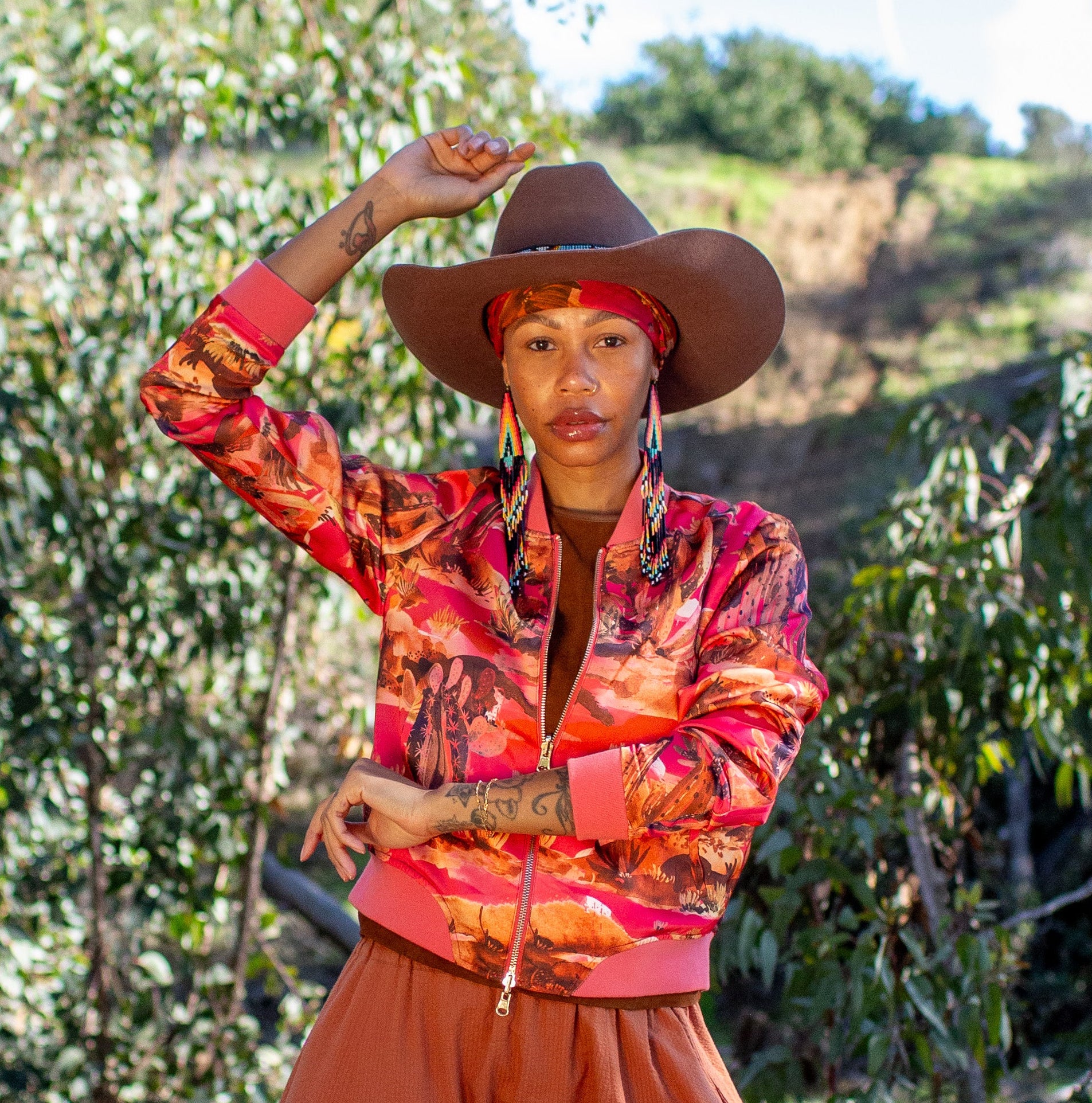
For scale, our Wild Rag Scarf Square - Silk Cotton is $82, the Reversible Bomber Jacket is $388, and the Penny Deluxe Wild Horses Faux Fur Trim Coat is $598.
A simple budget table using our catalog as an example:
| Tier | Example Piece | Price | Role in Collection |
|---|---|---|---|
| Entry | Wild Rag Scarf, Silk Cotton | $82 | Test the artist's palette |
| Mid | Reversible Bomber Jacket | $388 | Everyday statement layer |
| Anchor | Penny Deluxe Faux Fur Trim Coat | $598 | Centerpiece of the collection |
Price
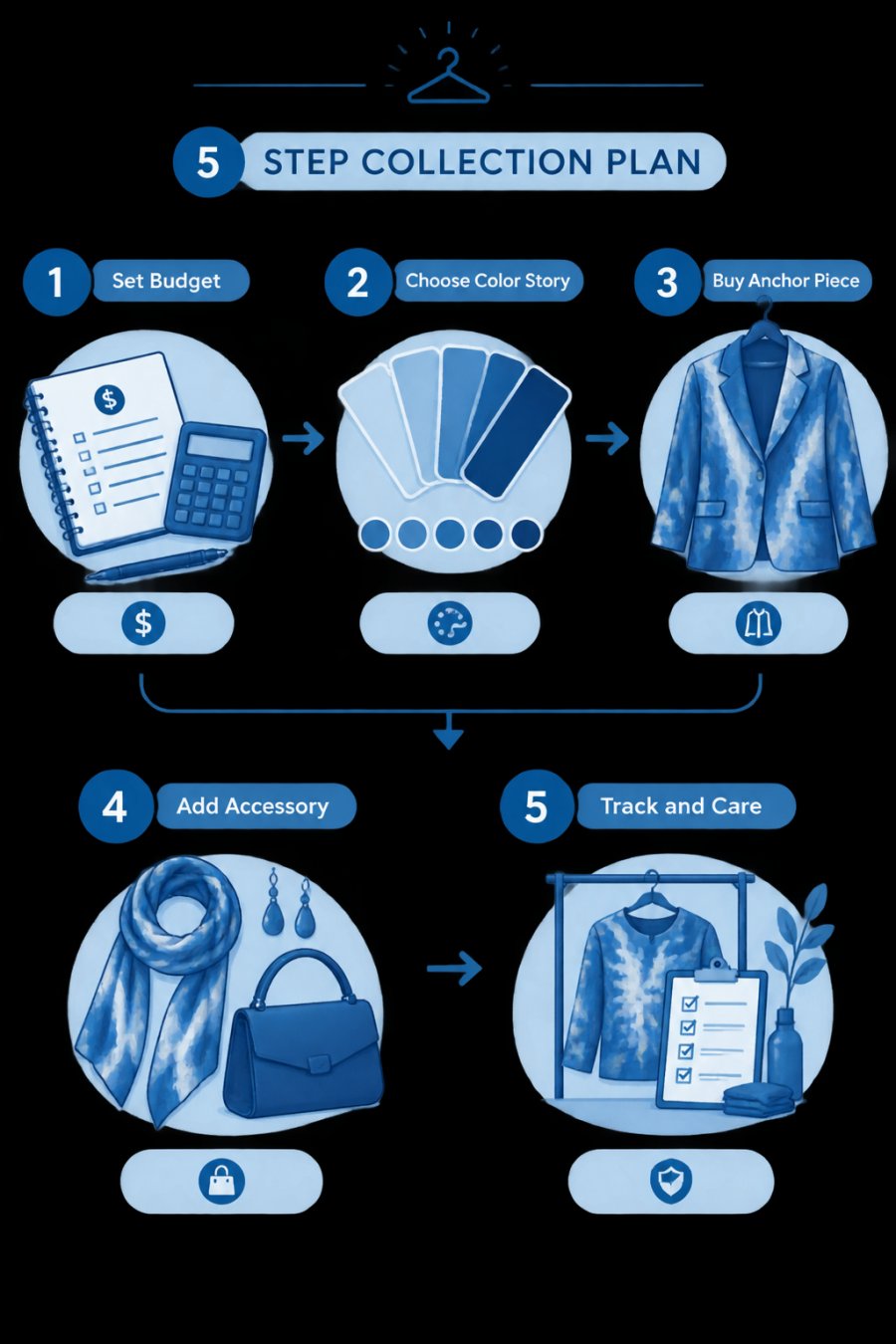
Prioritize in this order
- Set a yearly budget you can spend without regret, and write it down.
- Choose a color story that works with what you already own.
- Buy one anchor piece, the boldest item you will actually wear.
- Add one wearable accessory to extend the story.
- Track each piece: purchase date, price, care notes, and storage location.
Run a wardrobe audit before you buy
Before your next purchase, spend twenty minutes on a simple audit. Lay out the pieces you already wear most and note:
- Makers and editions. Who made each piece, and is it numbered?
- Materials. What fibers and surface treatments dominate your closet?
- Colors. Which three to five colors actually get worn?
- Wear frequency. How often did each piece leave the house in the last year?
- Gaps. What occasion or season has no expressive piece yet?
The audit is not a scorecard; its only job is to show which purchase would fill a real gap rather than duplicate something you own.
Track every piece
Keep a simple spreadsheet or notes-app entry for each purchase: artist, edition number, price, fiber and care needs, storage location, and a photo of the label and any certificate.
Watch out: a collection plan that never gets updated becomes a wish list. Review the tracker once a season and retire pieces you no longer wear.
Caring For and Storing Your Pieces
Store wearable art flat or on padded hangers, away from direct sunlight.
Follow the care label on each piece. For the Penny Deluxe coat, spot wash or dry clean with low temperature treatment, and avoid drying or steaming it.
For a deeper walkthrough, read our guide on how to care for printed garments.
Shop Your First Artist-Made Piece
Your first purchase should be the piece you reach for weekly, not the one you admire from the closet.
Our new arrivals are where limited-edition runs land first, and they sell through without restock.
The hardest part of collecting wearable art is not finding bold pieces, it is choosing well the first time, so every later purchase builds on a piece you still love.
Frequently Asked Questions
What is considered wearable art?
Wearable art is clothing, jewelry, or accessories made as an artistic statement rather than a mass-market product. The defining traits are an original concept or story, artist-made or limited production, and visible craftsmanship such as surface design, painting, or sculptural construction. A printed silk scarf or a hand-finished coat can qualify; a plain logo tee usually does not. When you start a wearable art collection, look for a piece where the design clearly comes from one artist's creative vision, not a trend cycle.
How much should I budget for my first wearable art pieces?
Start with a number you can spend without regret, then buy one anchor piece instead of three cheap ones. Accessories are the lowest-cost entry: a Wild Rag Scarf Square - Silk Cotton from Alana Kay Art runs $82, and the silk charmeuse version is $124. Apparel sits higher, with the Reversible Bomber Jacket at $388 and the Penny Deluxe Wild Horses Faux Fur Trim Coat at $598. A realistic first-year plan is one anchor piece plus one accessory, then add as budget allows.
How do I choose wearable art I will actually wear?
Match every candidate piece to at least three outfits you already own before you buy. Check the color story against your existing palette, confirm the fit, and ask whether the care routine fits your life, since many artist-made pieces are dry clean only. A good test is versatility: the Alana Kay Art Reversible Bomber Jacket gives you two prints in one garment and pockets on both sides, .
How should I care for and store wearable art clothing and jewelry?
Follow the artist's care label exactly, because surface treatments and delicate fabrics rarely tolerate normal washing. The Wild Rag Scarf Square - Silk Charmeuse is dry clean only, and the Penny Deluxe coat should be dry cleaned or spot washed at low temperature, with drying and steaming avoided. Store pieces flat or on padded hangers, away from direct sunlight. Photograph each piece and note the purchase date for insurance.

Leave a comment