
How to Maintain a Minimalist Wardrobe Long Term
Last Updated: November 16, 2026
Quick Summary
Maintain a minimalist wardrobe long term by running a yearly reset, rotating clothes seasonally, caring for garments so they last, and funding a replacement budget. Treat your wardrobe like a garden, not a museum: it needs a yearly reset, seasonal care, and a budget for replacements.
- Run a one-page checklist once a year: empty the closet, sort into keep, repair, and donate, and note gaps.
- Store off-season items clean and folded in breathable bins with a list taped inside the lid.
- Wash in cold water on a gentle cycle, skip fabric softener on natural fibers, and air-dry when you can.
- Fund a replacement reserve monthly, roughly $33 a month on the sample plan, and roll it forward if unused.
- Let clothes you no longer wear leave the closet within a month of deciding, sorting them into repair, donate, sell, or recycle.
Table of Contents
- Why a Minimalist Wardrobe Falls Apart Without Maintenance
- Your Minimalist Wardrobe Checklist for an Annual Reset
- How to Handle a Seasonal Wardrobe Rotation Without Starting Over
- How to Care for Clothes So They Last Longer
- A Minimalist Wardrobe for Changing Style, Bodies, and Seasons of Life
- A Realistic Replacement Budget and Tracking System
- What to Do With Clothes You No Longer Wear
- Choosing a Limited-Edition Piece That Earns Its Place
- Frequently Asked Questions
Why a Minimalist Wardrobe Falls Apart Without Maintenance
A minimalist wardrobe is a small, carefully chosen set of clothes that fit your life, your body, and your style, and that you actually wear. It falls apart not because the idea is wrong, but because nobody plans for maintenance. Clothes wear out. Bodies change. Trends pull at you.
A wardrobe built for the long term needs planning, so it is worth thinking about this carefully. The fix is simple: treat your wardrobe like a garden, not a museum. It needs a yearly reset, seasonal care, and a budget for replacements.
Below, we'll show you exactly how to maintain a minimalist wardrobe long term, with a repeatable routine you can actually keep.
Your Minimalist Wardrobe Checklist for an Annual Reset
A minimalist wardrobe checklist is a one-page list you run through once a year to decide what stays, what gets repaired, and what leaves. Set aside two hours. Pull everything out.
- Empty the closet. Everything on the bed.
- Sort into three piles: keep, repair, donate.
- Check wear frequency. If you didn't wear it in a year, it goes.
- Note the gaps. What did you reach for that you don't own?
- Set a replacement budget.
- Put it back by category.
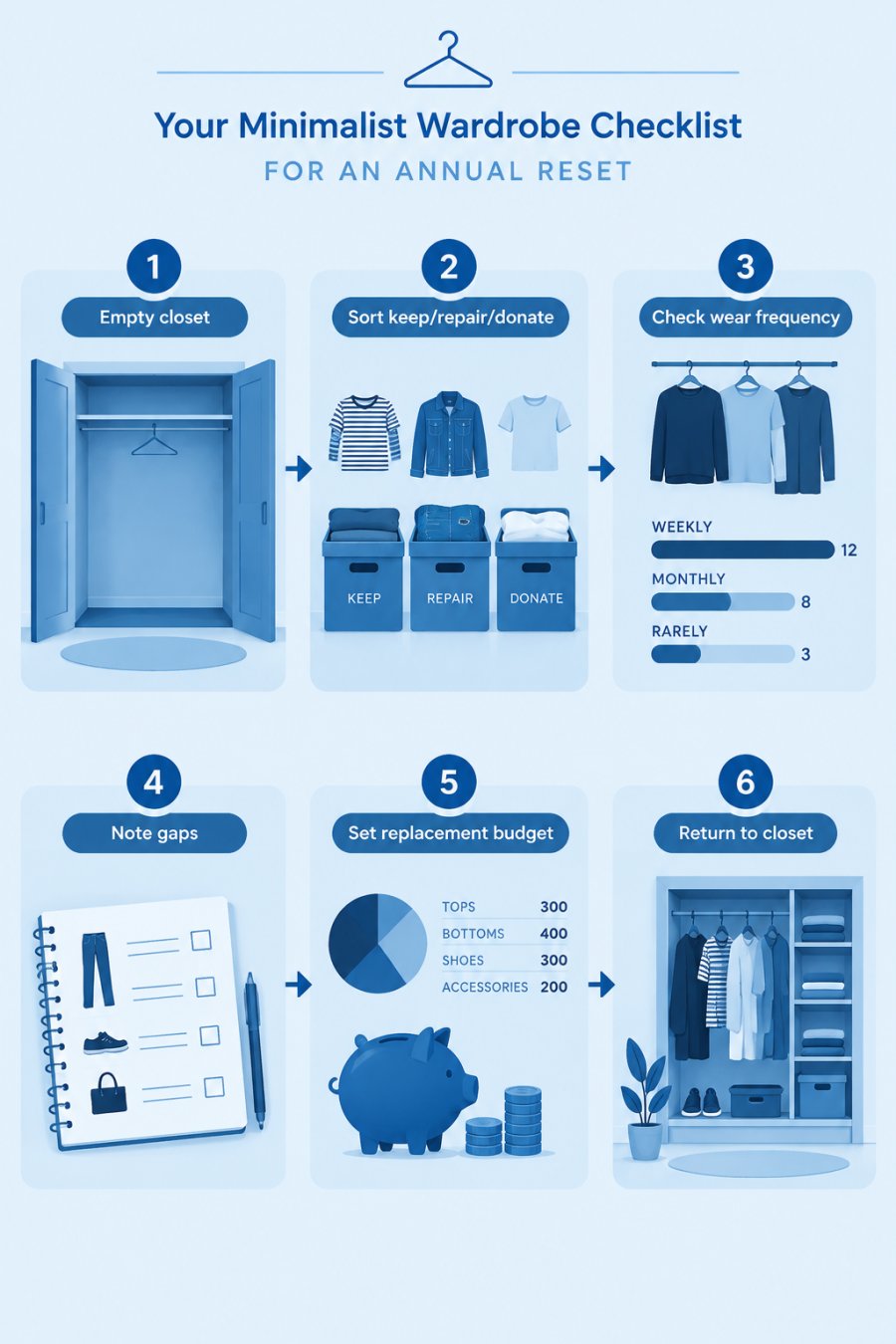
A common mistake is skipping step four. The gaps tell you what to buy next, so you stop guessing. For a core slot, see our straight leg pants with pockets.

How to Handle a Seasonal Wardrobe Rotation Without Starting Over
A seasonal wardrobe rotation is the practice of moving off-season clothes out of your main closet and bringing the current season's pieces forward. It is not a reason to buy a new wardrobe.
Store off-season items clean and folded in breathable bins. Keep a short list taped inside the lid of what's in there. When the season turns, swap the bins and check each piece for stains or loose seams before it goes back in.
What most guides miss: rotation is also a review. Handle every piece twice a year, and small repairs never pile up.
How to Care for Clothes So They Last Longer
Caring for clothes so they last longer comes down to four habits: wash less, dry smarter, repair early, and store clean. Most garments die in the laundry, not on your back, and the difference between a piece that lasts three years and one that lasts eight is usually a handful of small routines.
Laundering. Wash in cold water on a gentle cycle, turn pieces inside out to protect color and print, and use mesh bags for delicates and knits. Measure detergent instead of eyeballing it; leftover residue dulls dark fabrics and attracts dirt. Skip fabric softener on natural fibers because it coats the yarn and reduces breathability. Wash denim and wool far less often than you think, spot-clean and air out between wears, and wash denim every five to ten wears unless it is visibly soiled.
Drying. Skip the dryer when you can. Hang or lay flat to dry, and reshape knits while damp so they keep their cut. Hot water and tumble drying can shrink natural fibers and fade bold prints. If you must use a dryer, choose the lowest heat setting and pull items out slightly damp.
Stain removal. Blot, do not rub, and treat stains while they are fresh. Cold water for protein stains like blood or dairy, and a small amount of dish soap worked in with a soft brush for oil-based marks. Test any treatment on an inside seam first. Checking the fiber content on the label helps you decide whether a stain treatment or a hot wash is safe.
Repair. Fix loose buttons, dropped hems, and split seams the week you notice them. A basic sewing kit and ten minutes beat a replacement purchase. Reattach buttons with a thread shank so the fabric does not tear, and reinforce the underarm seams on shirts that get heavy wear.
Storage. Store folded rather than on wire hangers. Clean items before off-season storage, because body oils and food residue attract moths and set stains over months. Store clean items in a cool, dry closet away from direct sun.
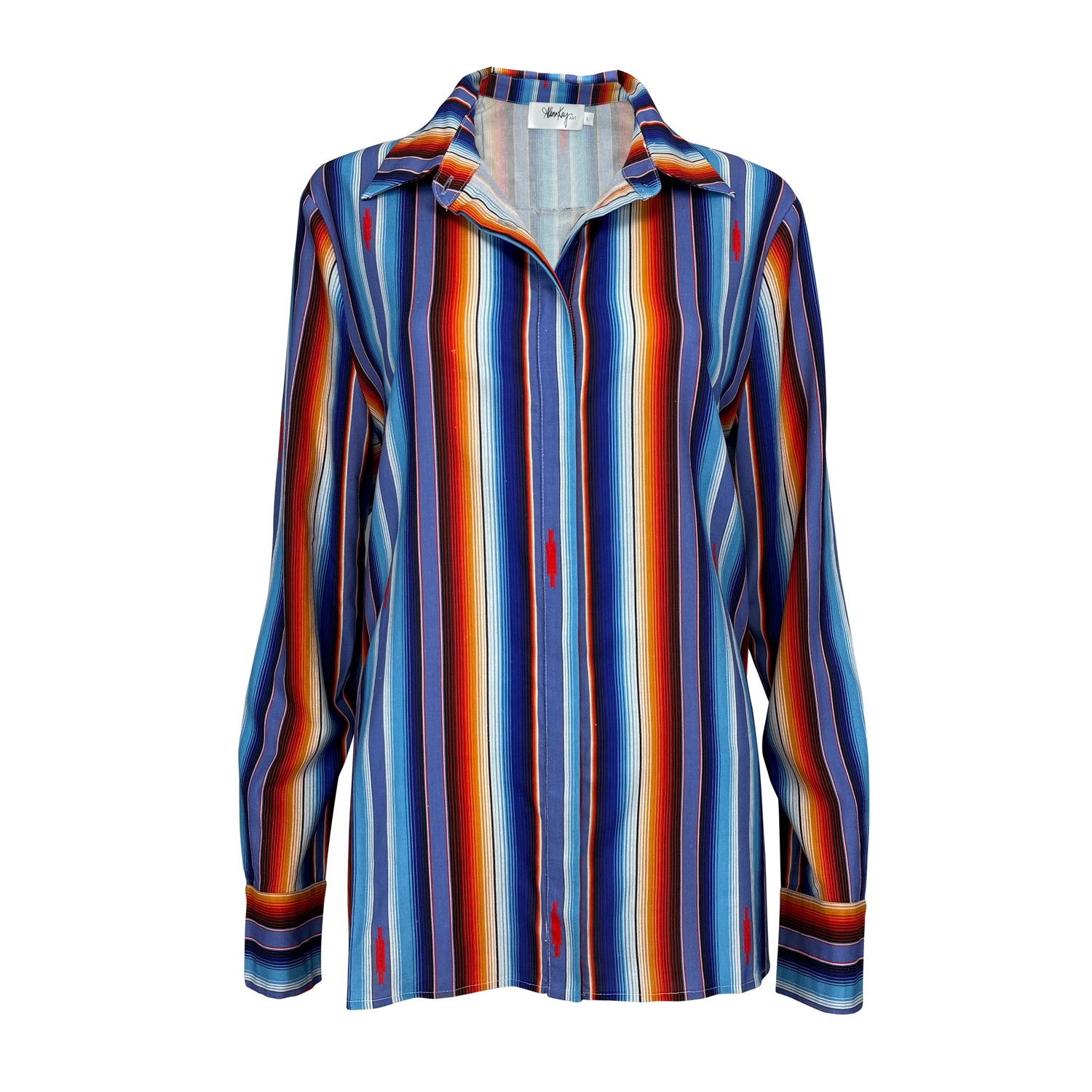
Natural fibers reward this care. Our button-up blouse in a linen-cotton blend is made from a linen cotton blend that breathes well against the skin. The Wild Rag scarf in silk and cotton is made from 30% silk and 70% cotton, so check its care label before washing.
Watch out: hot water and high dryer heat are the two fastest ways to shrink natural fibers and set stains permanently, so when in doubt, go colder and air-dry.
A Minimalist Wardrobe for Changing Style, Bodies, and Seasons of Life
A minimalist wardrobe for changing style is one that bends instead of breaking. Bodies shift. Jobs change. What felt right at thirty may not fit at forty.
Start with fit, not size on the tag. Keep a few pieces with elastic waists or relaxed cuts that move with you. Our wide leg pants with an elastic waist feature an elastic waistband and a relaxed fit.

Let your style evolve in small steps. Swap one piece at a time, not the whole closet. If you're coming from a closet full of fast fashion, expect the first year to feel like a slow rebuild. That's normal.
A Realistic Replacement Budget and Tracking System
A replacement budget is a set amount you put aside each year for wear-and-tear swaps. Without one, you either overspend on impulse buys or wear threadbare clothes too long because replacing them feels like a failure. The goal is a reserve you fund monthly so a worn-out pair of pants is an expected expense, not an emergency.
Start by estimating the lifespan of each category and dividing its replacement cost by the years you expect to get. That yearly figure is your set-aside. A sample plan for a small wardrobe:
| Category | Typical Lifespan | Replacement Cost | Yearly Set-Aside |
|---|---|---|---|
| Everyday tops | 2-3 years | $60-$120 each | $120 |
| Pants | 3-5 years | $80-$150 each | $80 |
| Outerwear | 5-8 years | $150-$400 each | $60 |
| Shoes | 2-4 years | $80-$200 each | $100 |
| Accessories | 4-6 years | $30-$80 each | $40 |
Replacement Cost
Fund the total monthly, roughly $33 a month on this plan, into a separate account or a labeled savings bucket. When something wears out, you replace it from the reserve instead of from your regular spending, which keeps the wardrobe stable without a spending spike.
Tracking wear. Turn a hanger backward each time you wear a piece, or keep a simple note on your phone with the date and item. At year's end, the hangers still facing the wrong way and the items with no entries tell you what to cut. A wear log also shows gaps: if you reached for a light layer ten times and do not own one, that is your next purchase, not a guess.
Cost per wear. Cost per wear is the purchase price divided by the number of times you wear it. A $356 blouse worn weekly for two years works out to about $3.42 per wear, while a $40 top worn twice costs $20 per wear. Run the math before you buy, not after.
Planned replacement. Review the reserve twice a year alongside your seasonal rotation. If a category is consistently underfunded, shoes, for most people, raise its monthly amount rather than borrowing from another category.
Watch out: a replacement budget is not a spending target. If nothing wears out in a year, roll the reserve forward instead of buying to use it up.
What to Do With Clothes You No Longer Wear
Clothes you no longer wear should leave your closet within a month of deciding. Sort them four ways: repair, donate, sell, or recycle.
- Repair anything with a fixable seam or button
- Donate clean, wearable items to a local charity
- Sell limited-edition or designer pieces
- Recycle worn-out textiles at a donation center
The FTC's guidance on textile labeling helps you read fiber content before you decide what's worth keeping.
Once the closet is clear, rebuild with intention. If you're drawn to color and character, our guide on where to buy unique colorful clothing shows where to find pieces that earn their place.
Choosing a Limited-Edition Piece That Earns Its Place
A limited-edition piece earns its place when it fills a real gap, fits your existing clothes, and gets worn at least once a week. Run this test before you buy:
- Does it match three pieces I already own?
- Will I wear it in the next thirty days?
- Is the fabric and construction worth the price?
Our silk-cotton Wild Rag scarf is handmade and comes beautifully boxed.
Watch out: "limited edition" is a sales tactic as often as it's a promise. Buy the piece, not the label.
Maintaining a minimalist wardrobe long term takes a yearly reset, honest care, and a small budget, not a bigger closet. At Alana Kay Art, we make limited-edition apparel from original artwork, built to be collected and worn for years. Our pieces are designed for people who refuse to blend in. Get started with Alana Kay Art and build a wardrobe where every piece earns its place.
Frequently Asked Questions
How often should you review a minimalist wardrobe?
Twice a year is the practical rhythm: a full reset in spring and fall, timed to your seasonal wardrobe rotation. Between those, do a five-minute check each month on what you actually wore. A quick monthly look catches items that are worn out, stretched, or simply never chosen before they pile up. If you have just changed jobs, moved, or had a body change, add a review right after the transition rather than waiting for the calendar.
How do you keep a minimalist wardrobe when your style changes?
Treat style change as a slow swap, not a purge. When you notice your taste shifting, spend one season wearing what you own before buying anything new. Note which pieces you reach for, then replace only those that no longer fit your style. A minimalist wardrobe for changing style works because you are editing a few items at a time, not rebuilding from zero. Keep one or two pieces you love even if they sit outside your current look; they often come back into rotation.
How can you make clothes last longer?
Wash less often, in cold water, and turn garments inside out before they go in. Air-dry anything with structure or delicate fiber, and store knits folded rather than hung. Learn basic repairs: a reattached button or a mended seam adds years to a garment. For pieces like a linen-cotton blouse or a silk-cotton scarf, follow the care label exactly. A small repair kit and 20 minutes a month cover most fixes.
What should you do with clothes you no longer wear?
Sort them into three piles: repair, donate or sell, and recycle. Repair anything with a fixable flaw first, because a mended piece often becomes a favorite again. Donate wearable items to a local charity, and send worn-out textiles to a fabric recycling program rather than the trash. Before any of that, ask whether the item is out of rotation or truly finished. Storing a maybe-piece in a box for one season is a fair test.

Leave a comment