
How to Identify High Quality Apparel: 7 Key Tests
Table of Contents
- What You'll Need Before You Start Evaluating High Quality Apparel
- Signs of High Quality Fabric: Density, Opacity, and Hand-Feel
- How to Check Garment Construction from Seams to Hardware
- Reading Care Labels and Fiber Content the Right Way
- Post-Wash Performance and Micro-Plastic Shedding as Quality Indicators
- How to Care for Printed Garments to Preserve Their Quality
- Common Mistakes to Avoid When Assessing High Quality Apparel
- Frequently Asked Questions
Last Updated: September 1, 2026
What You'll Need Before You Start Evaluating High Quality Apparel
Learning to identify high quality apparel is a practical skill that helps you shop smarter. At Alana Kay Art, we design every piece with specific construction standards in mind, and understanding those standards applies whether you're buying wearable art or a classic wardrobe staple.
Before examining any garment, gather a few simple tools:
What to have on hand:
- Natural daylight or a bright, neutral-toned light source (overhead fluorescents distort color and hide fabric flaws)
- A white piece of paper (useful for testing opacity)
- Clean, dry hands
- A magnifying glass (optional but helpful for stitching inspection)
Assess high quality apparel across four dimensions: fabric integrity, garment construction, fiber content, and long-term performance. Each tells you something the price tag cannot. A garment can cost a great deal and still be poorly made. Conversely, a mid-range piece built with genuine care will outlast three fast-fashion alternatives.
Work through each section below as a checklist. The more boxes a garment checks, the more confidently you can invest in it.
Signs of High Quality Fabric: Density, Opacity, and Hand-Feel
Fabric quality is the foundation of any well-made garment. Everything else, stitching, hardware, finishing, depends on it.
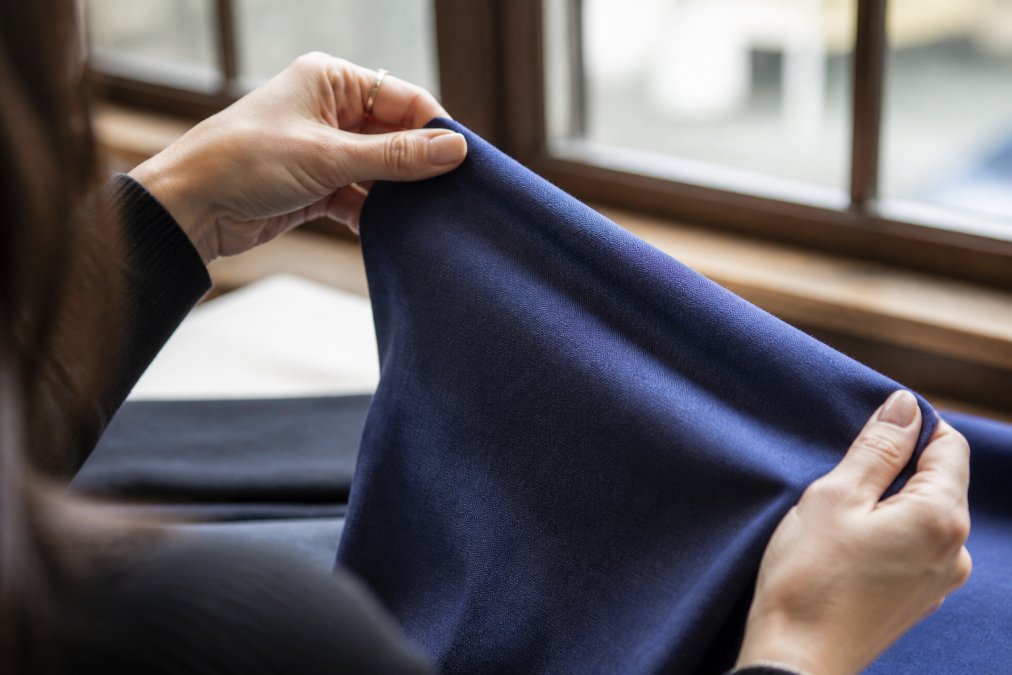
Hand-feel is your first signal. Run the fabric between your thumb and forefinger. High-quality fabric feels substantial without being stiff, with a smooth, even texture and no rough patches. Cheap fabric often feels scratchy, slippery, or thin to the point of translucency.
How to Test Fabric Density and Opacity
Hold the fabric up to a light source. In well-constructed woven fabric, the warp and weft threads should be tightly interlocked, leaving minimal light passing through. Excessive light transmission signals low thread count or loose weave.
The white paper test works for lighter-colored garments: place the fabric over white paper. If you can clearly read text through the material, the fabric density is insufficient. Opacity matters practically, a shirt that becomes see-through under office lighting is not finished goods.
Quality fabric falls naturally and holds its shape without bunching or clinging unnaturally. Poor drape usually indicates inadequate weight or a synthetic blend lacking fluid movement.
Stretch Recovery and Tensile Strength
Gently stretch the fabric in both directions and release it. Quality fabric should return to its original shape almost immediately. Slow recovery or permanent distortion signals poor tensile strength, the fabric will pill quickly, develop holes at stress points, and lose shape after minimal wear.
Knitwear vs. Woven Construction: Why the Difference Matters
Knitwear and woven garments require different quality assessments.
Woven fabrics (denim, twill, canvas) are made by interlacing warp and weft threads at right angles. They are more structured, less stretchy, and more prone to fraying. Quality woven garments have finished selvedge edges internally and clean seam lines.
Knitwear is constructed from interlocking loops of yarn, giving it inherent stretch. The quality test is loop consistency: examine the knit under good light. Loops should be uniform in size and tension. Irregular loops indicate inconsistent yarn quality or machine tension problems, accelerating pilling and deformation.
Pilling is one of the clearest signs of low yarn quality in knitwear. Quality knit garments resist pilling because the yarn is tightly twisted and the fiber length is long enough to stay anchored within the loop structure.
How to Check Garment Construction from Seams to Hardware
Garment construction is where mass production shortcuts become visible. A beautiful fabric can still be assembled carelessly.
Inspecting Stitching, Seam Allowance, and Hem Finishing
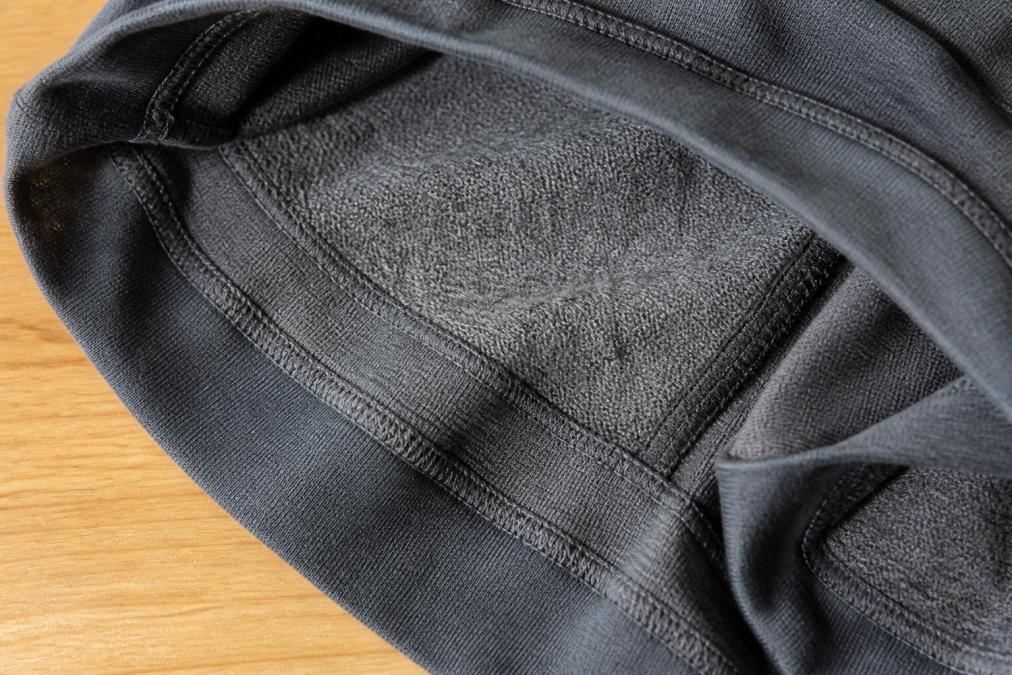
Turn the garment inside out. The interior reveals more about quality than the exterior.
Seam allowance is the distance between the stitching line and the raw edge. A generous seam allowance (at least half an inch on quality garments) gives the seam strength and allows for alterations. Narrow seam allowances are a cost-cutting measure that weakens the garment structurally.
Examine the stitch count. More stitches per inch generally means a stronger, more durable seam. Look for even, consistent stitching with no skipped stitches, loose threads, or puckering. According to guidance from the American Apparel & Footwear Association, consistent stitch density is one of the primary markers of professional garment construction.
Quality hems are turned under cleanly and stitched with even tension. Overlocked or serged edges on interior seams prevent fraying over time. Raw, unfinished edges lead to visible deterioration after washing.
Evaluating Buttons, Zippers, and Other Hardware
Hardware durability is a reliable proxy for overall garment quality. Manufacturers who invest in quality zippers and buttons almost always invest in quality everywhere else.
Zippers: Run the zipper up and down several times. It should glide smoothly with no snagging or misalignment. YKK is the most recognized zipper manufacturer globally. The zipper tape should be firmly attached with reinforced stitching at both ends.
Buttons: Press each button firmly. Quality buttons are dense and resistant to cracking. The button shank should be reinforced with a small thread shank on the reverse side, preventing the button from tearing through the fabric. Buttons that are glued rather than sewn will fail quickly.
Snaps and hooks: These should close with a firm click and show no signs of corrosion or rough casting.
Pattern Matching at Seams and Lining Quality
Pattern matching is the clearest sign that a manufacturer prioritized craftsmanship over speed. On any garment with a stripe, plaid, or repeating print, the pattern should align continuously across seam lines. Mismatched patterns indicate pieces were cut and assembled without regard for visual continuity.
A quality lining is cut on the bias where necessary, attached cleanly at the seam allowances, and finished at the hem independently from the outer fabric. A lining that is glued or roughly attached signals that the manufacturer's investment stopped at the visible exterior.
Reading Care Labels and Fiber Content the Right Way
Care labels are a legal requirement under the Federal Trade Commission's Care Labeling Rule, which mandates that all garments sold in the United States include permanent care instructions and fiber content information.
The fiber content percentage tells you exactly what you're buying. Fabrics are required to list fibers in descending order by weight. A garment labeled "60% cotton, 35% polyester, 5% elastane" is a synthetic-dominant blend.
Natural Fibers vs. Synthetic Blends
Natural fibers, cotton, linen, wool, silk, cashmere, are generally more breathable, more comfortable against skin, and more biodegradable. They age more gracefully. A quality cotton garment softens with washing; a quality wool piece maintains its structure for years.
Synthetic blends are not automatically inferior. Polyester increases durability and wrinkle resistance. Elastane adds stretch recovery. The question is proportion and purpose. A 95% merino wool sweater with 5% nylon for reinforcement is a quality choice. A 60% polyester shirt marketed as "premium" is different.
Watch for vague labeling. "Exclusive of decoration" or "exclusive of ornamentation" clauses allow manufacturers to exclude trims, linings, and embellishments from the fiber content calculation.
Post-Wash Performance and Micro-Plastic Shedding as Quality Indicators
A garment that looks beautiful on the rack but degrades after two washes is not quality, it's a well-staged display item. Post-wash performance is the true test of construction integrity.
Quality garments should maintain their shape, color, and texture through repeated washing according to their care instructions. Shrinkage beyond 3-5% after the first wash, significant color fading, pilling, or seam distortion are all signs of construction or material failure.
Micro-plastic shedding is an emerging quality indicator with both environmental and practical implications. Synthetic fabrics, particularly polyester fleece and low-quality synthetic blends, shed microscopic plastic fibers with every wash. According to research highlighted by the Environmental Protection Agency's textile guidance, synthetic textile washing is a significant contributor to microplastic pollution in waterways.
From a quality perspective, high micro-plastic shedding correlates with loosely bound synthetic fibers, meaning the fabric itself is breaking down. A garment that sheds heavily is degrading structurally. Choosing higher natural fiber content or tightly woven synthetics with longer fiber lengths reduces shedding and extends garment life.
How to Care for Printed Garments to Preserve Their Quality
Printed garments require specific care to preserve both the base fabric and the print integrity. Alana Kay Art's limited-edition pieces are built around original artwork, so the print is the defining feature.
Core care rules for printed garments:
- Wash inside out, always. This protects the print surface from abrasion.
- Use cold water. Heat is the primary cause of print degradation.
- Avoid tumble drying on high heat. Air dry when possible, or use a low-heat setting.
- Skip fabric softener. It can interfere with print adhesion and cause colors to appear dull.
- Iron on reverse. Always iron on the reverse side of the print.
- Store flat or folded, not on hangers. Heavy printed garments can stretch at the shoulder when hung.
According to guidance from the Textile Exchange's fiber and materials standards, proper garment care is one of the highest-impact actions a consumer can take to extend garment lifespan and reduce textile waste.
| Care Action | Why It Matters | Frequency |
|---|---|---|
| Wash inside out | Protects print surface from abrasion | Every wash |
| Cold water wash | Preserves dye adhesion and prevents shrinkage | Every wash |
| Air dry or low heat | Prevents print cracking and fabric distortion | Every wash |
| Skip fabric softener | Maintains print vibrancy and fiber integrity | Every wash |
| Iron on reverse only | Prevents direct heat damage to print layer | As needed |
| Store folded | Prevents shoulder stretch and print distortion | Ongoing |
Common Mistakes to Avoid When Assessing High Quality Apparel
The biggest mistake is trusting price as a proxy for quality. Many expensive garments are constructed with the same shortcuts as budget pieces. Conversely, some mid-range garments are built to genuinely high standards.
Judging by exterior appearance only. A beautifully finished exterior can conceal poor seam construction, low-quality lining, and inadequate interfacing. Always check the inside.
Ignoring the care label. The fiber content and care instructions tell you exactly how the manufacturer expects the garment to perform.
Overlooking stress points. The underarms, crotch seams, and pocket openings are where garments fail first. Check these areas for reinforcement stitching and adequate seam allowance.
Assuming natural fiber equals quality construction. A 100% linen shirt with poorly finished seams is still poorly constructed. Fiber content and construction quality are separate variables.
Skipping the stretch test. Stretch recovery tells you how the garment will perform after a full day of wear.
Choosing high quality apparel takes practice, but the framework above gives you a reliable starting point for every purchase. Fast fashion has normalized poor construction, shifting the baseline expectation toward disposability. Alana Kay Art was built as a direct response to that trend: limited-edition pieces designed around original artwork, crafted to be worn and collected rather than discarded. If you're ready to invest in apparel that holds up to every test in this guide, shop the current collection and find a piece that's genuinely built to last.
Frequently Asked Questions
What are the key indicators of high-quality fabric?
The clearest indicators are fabric density (hold it to light, minimal light passing through signals tighter warp and weft), consistent yarn quality with no thin spots, and strong stretch recovery. Natural fibers like cotton, wool, and silk tend to drape and breathe better than synthetic blends. Rub the fabric gently between your fingers: pilling after just a few seconds of friction is a sign of low yarn quality and poor garment longevity.
Does a higher price tag always mean better quality clothing?
No. Price reflects many factors beyond construction, marketing, brand positioning, and retail markup among them. A garment can be expensive and still have loose stitching, weak interfacing, or low-grade hardware. Conversely, independent and limited-edition labels often produce genuinely well-made pieces at prices that reflect materials and craftsmanship rather than advertising spend. Always run the physical tests: check seam allowance, stitch count, and fiber content regardless of cost.
How can you tell if a garment is well-constructed?
Flip the garment inside out and examine the seams. Quality construction shows even stitching with 8 to 12 stitches per inch, generous seam allowances, and finished edges that won't fray. Stress points like underarms and pockets should have reinforcement stitching. Check that patterns align at the seams, mismatched stripes or prints signal mass production shortcuts. Hardware like zippers should glide smoothly, and buttons should feel solid with a proper shank rather than sitting flush against the fabric.
How do you care for printed garments to keep them looking their best?
Turn printed garments inside out before washing and use cold water on a gentle cycle. Avoid high-heat drying, which degrades both the print and the base fabric over time. Harsh detergents and bleach break down pigments quickly, a mild, color-safe formula preserves vibrancy. For artist-designed or limited-edition pieces, hand washing is the safest option. Store printed items folded rather than hung to prevent distortion, and keep them out of prolonged direct sunlight to prevent fading.
Leave a comment